Latest Posts

Knititis

I am suffering from two well known knitter’s ailments. I have had them separately, but they have compounded on me this time.

I’ve definitely got startitis and a bout of “I want to knit all the things!!!” I can’t help that so many beautiful patterns are catching my eye and being recently released!
Katya Frankel’s perfectly autumnal collection Yarn Play is one such inspiration – with Cherrystone begging to be cast on with great immediacy!

I also have Gudrun Johnson’s Amelie on my favourites list, along with some gorgeous British alpaca to knit it with. It has a beautiful vintage look and is very feminine.

I also have been bitten by what I call necessity knitting: scarves, shawls, wristies and hats!

However, amid all the inspirations and the starting of projects I began to find I was suffering with can’t-get-it-finished-malady!

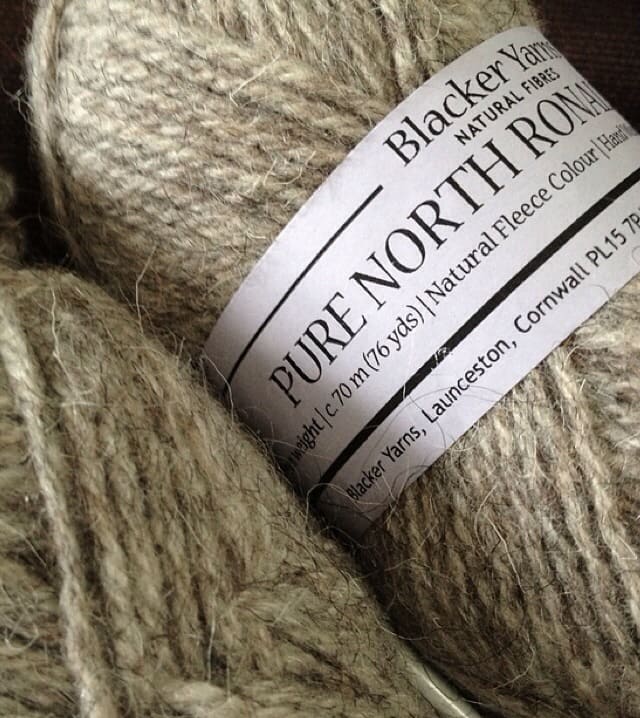
I was a third way through Karie Westermann’s newest release from Doggerland, Ythan, when I realised I was too sensitive to the lovely North Ronaldsay aran wool!
20130929-192123.jpg

I was a bit upset about ripping that one back as I was loving the pattern and North Ron is the perfect texture of wool for the lovely, rustic knit hat!
Nevermind, I have some New Lanark Donegal Silk that’ll do nicely, but sad to realise I am a bit intolerant to that particular breed. The wool has a unique feel – both sturdy and very soft!

So then I started knitting a second Ishbel with a beautiful, vibrant, rusty orange.

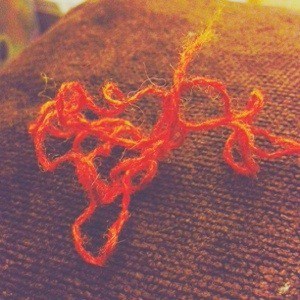
I bought this on a cone in a second hand sale, but I think it may have been a fault in manufacture as every half a metre it thinned out and just broke! So annoying – that colour just zings, but alas it is now in the bucket!
20130929-201721.jpg

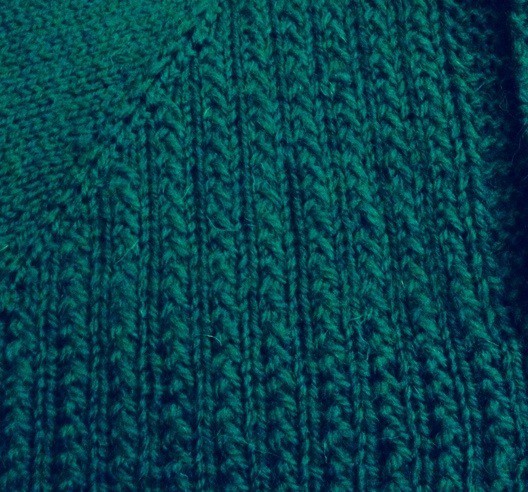
I am also knitting Alec, by Sarah Ronchetti. I adore the pattern on the front, but my tension on this has gone completely ca-ca! The wool I am using is Marriner DK with 25% British wool and I am wondering if the acrylic might be the reason I keep rowing out. I am a looser purler than knitter, but I feel my tension is better with more wool content. I am halfway down and I am onto the circular part, but think I do need to rip it back and try again – I just see all the imperfections!
20130929-203631.jpg

So, I guess wool woes are really the root of my can’t-get-it-finished-malady, but my mood has done little to help. I’ve been having a little bit of anxiety of late and often that doesn’t help the old concentration – I have 3/4 of a pair of fingerless gloves and a Kirkja shawl that have got picked up and put down in short bursts over the last couple weeks. Neither have grown very much!

So I am inspired to knit all the things, but either can’t finish anything or can’t spend too long on one thing. Anyone else had all these at the same time?

Often at this time of year I have a bit of a “knit all the things” time thinking about gift knitting, which about a month later is followed by “why am I knitting for everyone?”, but that pressure usually comes from making sure you knit something equal for ALL the neblings and friend’s kids and I am sick of same knit after knit!

Prior to this unwelcome spell I have enjoyed knitting up some patterns with some wonderful British wool that I’ll be blogging about soon, but it’s been sort of famine or feast-y since then!

Too add insult to injury in the ups and downs of my WIPs, the startitis also contains high doses of feeling the need to learn new techniques – such as sock knitting, I ask you! Never been interested in socks before – knitting them, I mean – and wearing my first pair of hand-knitted socks has got me thinking about it. I say “thinking”, because in my present knitting state of health I would be crazy to try and learn!

I think I am going to have to try and avoid Ravelry for a couple of days to escape inspiration and try and sort out my WIPs!
I hope this spell is over before I start knitting for OwlPrintPanda’s Ye Olde Christmas Swap on ravelry (sign up’s open til tomorrow, the 30th!)

How are you, readers? Are you amid Christmas gift knitting yet?
Wee heads up for ewe

Just a very quick post to tell you that Made by Ewe have a new website.

20130924-161323.jpg

You may remember Linda was over here at KnitBritish a wee while ago talking about her beautiful 100% British Wool kits.  Her new shop site is up and running and to celebrate she has something special for you!

Check out her blog!

Furrow

Autumn is here now, for sure! I know this because I feel the need for a coat with a hood, boots and a very long scarf!

I wrote not so long ago about those autumn colours calling to me and the need to get cosy. Well, I could find no cosier than the parcel I unwrapped from Little Houndales Knits.

The Little Houndales shop was one of the first places I was directed too when I started asking about people’s favourite British wool.

Their aran Suffolk crossed with 50% British alpaca is a truly delightful wool and the sheepy part comes from the company’s own Suffolk sheep, kept on the Yorkshire Wolds.

The wool is has an unbelievably soft handle and lovely texture with the longer, softer alpaca fibre and the pure wool.

I really adore the depth of colours in these yarns with lighter flecks reflecting out and there is a lovely lustre too.

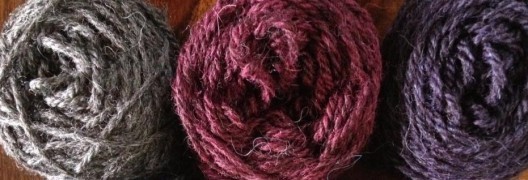
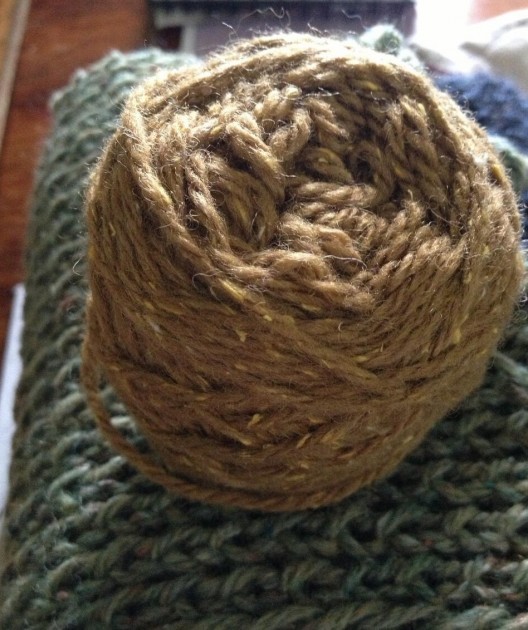
Having bought five colours in the range; dark pink, dark plum, natural gray, dark denim and dark purple – sumptuous colours! – I felt my heathery hues needed a little green and ochre for the full autumnal feeling. I went stash diving and found some great New Lanark Donegal Silk Tweed


In knitting this scarf there were a few things I knew I wanted: I wanted it to colourful, I wanted it to be long and I wanted it to be easy enough a project to take to my knitting night (so I could do plenty of yakking and not worry about dropping stitches!)

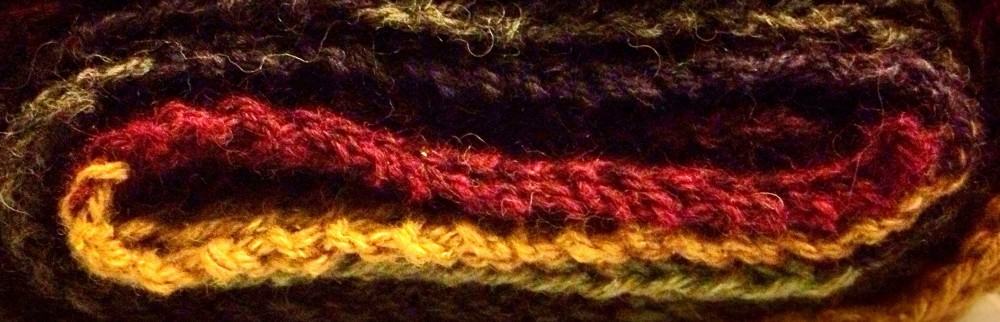
I knit it in a twisted rib to add a little bit of interest and the effect reminds me of furrowed fields. I also alternated the rib pattern between colours. I wanted it to have the look of sewn together squares, but could not be bothered to do any sewing!

Yesterday the lovelyfella and I took a drive, had the best locally-caught fishy tea, visited the Delting Marina and went to the little woods at Voxter and took a couple of pictures. The colours around me just fed my seasonal spirit to the brim!


You can see how I knit it here and do one yourself, if you fancy!

PDF: furrow scarf


Little Houndales Knits Yorkshire Wolds Aran with Alpaca costs £6 for a 50g/70m ball

New Lanark Donegal Silk Tweed Aran costs £4 for a 100g/160m ball.

Check them out!

The Work They Say Is Mine


After my recent post about my knitting heirlooms the connections between knitting and the past kept coming.

The lovelyfella and I went to the Shetland Museum to watch a film recently called The Work They Say is MineIt was made for Channel 4 in the mid 80s and looked at women in industry in Shetland and particularly how knitters were affected by the truck system.

Although Truck was banned in the early 1800s, women in Shetland were expected to exchange their knitting for goods from the merchant for many years after – our host suggested this carried on until the turn of World War II!

Some of the elderly women interviewed in the film talked of the feelings of exploitation of their craft and how their work would be scrutinised by the mill or merchant. One woman said, if they didn’t like the colour they could take value off the item.When the items of clothing and hosiery were assessed the value was given in tea or draperies. One person interviewed by the Truck Commission of 1872 said of Shetland knitters that they were almost starving, but dressed in finery!

One of the women in the film commented that as Truck was illegal the merchant took the money (that the item was worth) out of the till and laid it on the desk: the knitter then chose her goods and the money was placed back in the till – they were shown the financial worth of their goods, but money rarely changed hands. In later years, if you did not require tea or other goods that the merchant could offer they would give ninepence out of every shilling – daylight robbery.

The same interviewee, Mary Manson, said that she knit as a child so that she could afford clothes for school. The deadline for her hoisery was coming up fast and she was scared that if she did not manage to finish her order she would not be able to go to school. She did manage to finish it and bought two pinafores and underskirts and these were to the value of 7 shillings for the work she did.

As someone who knits for pleasure, it was jarring to hear one of the younger women on the film saying that she could not conceive of picking up knitting needles and never wanted to learn: the way her mother was exploited had disgusted her. Women were over a barrel – knitting to deadlines in order to survive; standing before the merchant having every single stitch scrutinised and having to take whatever they deemed suitable for hours of intricate work.

I mentioned previously that my mum’s mum knitted jumpers to sell from the 1950s. The barter system was over but nevertheless the impetus was to knit to help supplement the family income. When I think about it now, I cannot remember seeing my Nannie knitting often – if at all – when I was a child. I remember her rigging up the board to dress washed jumpers and maybe fixing holes in cuffs, but I never remember seeing her knit a garment. I don’t think she knitted for pleasure.


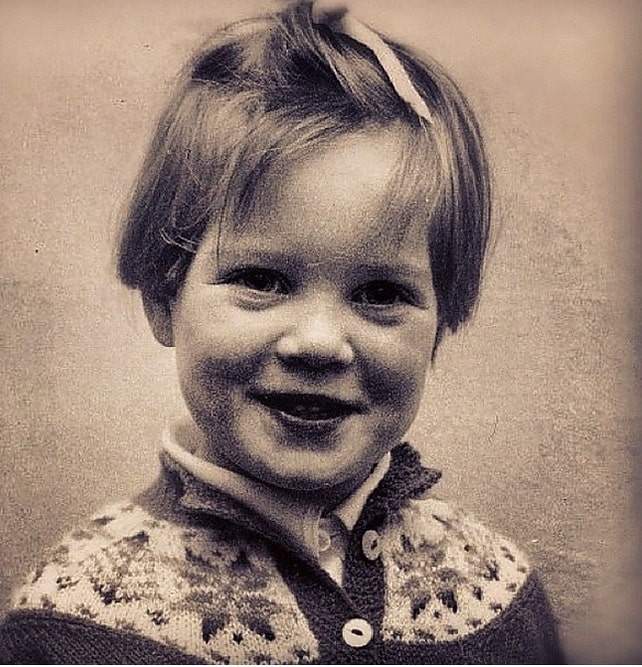
My mam, wearing a hand-knitted Fair Isle yoke cardigan

In the 1980s my mam knitted jumpers on machine. She made between £12 and £20, depending whether she had her items bought by a broker or privately. I know categorically she did not knit for pleasure, and she will admit that she would have no interest in picking up the needles now. She also knitted to supplement the family income and probably knew something of the “tears of tiredness” that the women in the film talked off – the frustrations and emotional tiredness of knitting through the night to finish the items. I can recall vividly the rip-rip-rip-rip of her knitting machine in the room below our bedroom. I know it was an arduous job at times, but it was quite a comforting sound!

It’s actually quite funny thinking about it now. I always thought of my love of knitting as something that was passed on – but in reality knitting was not a peaceful pass-time in our houses. I do feel a connection between my knitting and theirs – I did learn to knit while Mam was constructing her jumpers to sell -but I know nothing of their connection to knitting and what knitting meant or mean to them.

The film, made by Rosie Gibson, was shown by the Shetland Moving Image Archive and I don’t think it is widely available to view, but it was an amazing insight into the industry in Shetland and just how knitters- without whom there would have been no industry – were seriously taken advantage of.

If you wish to read more about the barter system or any aspect of women in industry in Shetland I can highly recommend Lynn Abrams excellent book, Myth and Materiality in a Women’s World (2005)

Knitting hand-me-downs

A little while ago I told you that I had gone to my mam’s to claim my knitting heirlooms. I had been complaining to her that I had a pile of jumpers to wash and the thought of pinning them all out again filled me with dread when she reminded me that my Nannie’s – her mam  – jumper board was gathering dust, waiting to dress a jumper once more.

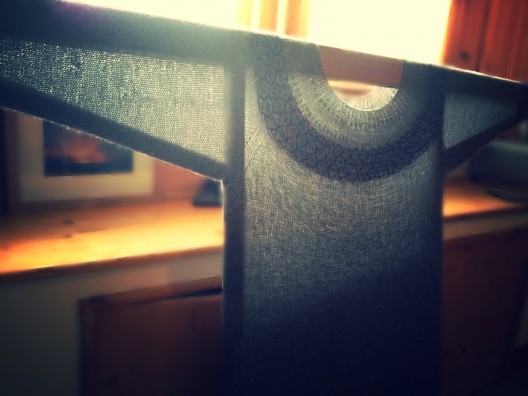
Jumper boards perfectly block wool garments without the pain of pin jabs or, indeed, without bending every pin in the tin, like I did with my etterscabs jumper!


Greig’s Close, Charlie Williamson and his mother Barbara, Shetland patterned allover jumper on board. 1920s.  Photographer J D Rattar

Jumpers on jumper board. 1952

As these photographs from the Shetland Photographic Archive show, jumper boards would have been used by almost every Shetland home at one time or another. As  a child in the 1980s the cry was often heard, “watch the jumper board!” , as we careered about the sitting room – paying little attention to the board close (but not too close!) to the fire guard.

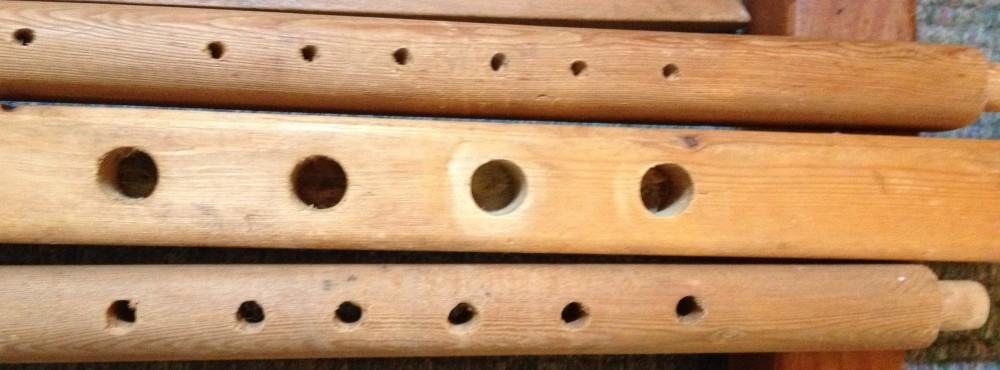
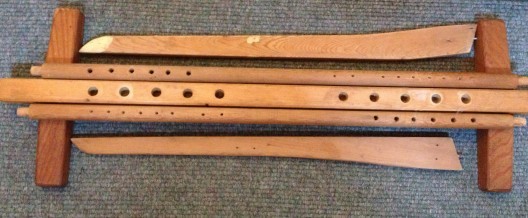
The board is set to the correct measurement by placing struts on the base and in the same corresponding holes along the top sleeve board (not shown in this pic as it is too long!). Then the lower sleeve boards are put in place. This board would have been able to dress jumpers from bairns to large adults.


Setting it up takes a little bit of getting used to, but once you measure the distance between the holes and know how big your finished item should be it becomes a bit instinctive.

There are different types of board. All were handmade in Shetland, some by the wool brokers or mills, but also they were made in the community, like my nannie’s. You can see that it is a fairly simple design and I know that it was an integral piece of kit – particularly if you worked in the knitwear industry.

My nannie did work in the local industry – my granddad too – they both had jobs but also worked from home knitting and making up jumpers. They had a huge (huge to us kids, I suppose!)  upright knitting machine, presumably one they rented or paid in instalments from the broker they knitted to.

Their machine was very similar to this one, again from the Shetland Museum and Archives website.

Knitting machine set up with wool. 1958-60. Sandwick, Shetland. Photographer B. Storey

It must have taken up so much room in the house! I remember feeling very annoyed when it came to live at our house as our playroom became the knitting machine room. This alongside my mam’s more modern Brother-style machine, which she used to make jumpers on when the knitting industry boomed again in the 1980s.

Another piece of my knitting genealogy passed down was this item…

(…and that little bit of wool in there is a bit of Shetland wool from circa 1985!)

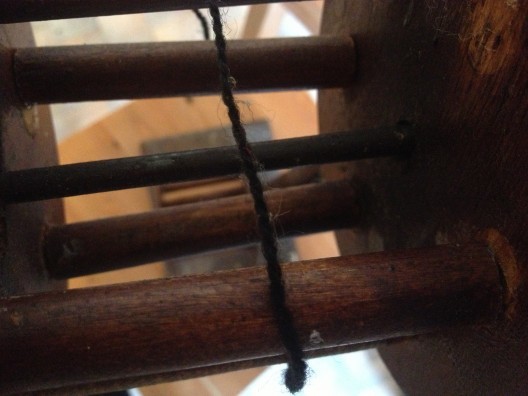
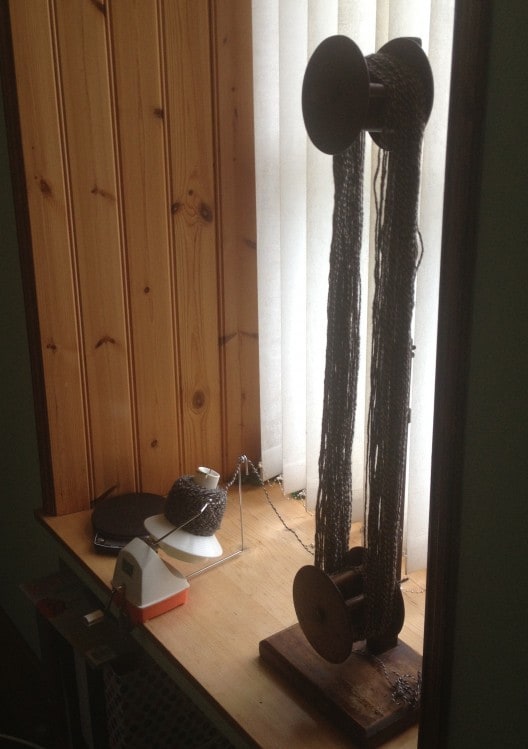
We had always called this contraption the wool winders, but thanks to a twitter chum I found out it is actually called a squirrel cage swift. This I can remember my nannie and my mam both using and – given that it has been in the loft since the mid 1980s,  it needed a lot of cleaning and a bit of care to come of the dowels.

This was probably hand-made for her too. Height adjustable you place the hank over the cages and begin to unwind. I am actually unsure if I am supposed to anchor one end of the hank to the swift, but I certainly managed to get it working.


All too often we hold on to things in the name of posterity and eventually forget about them, or forget that they still have a use.

I feel very proud to have been given these things and to be able to give them a use again.


Approaching Autumn

I think the seasons are beginning to shift…

…even though I have never particularly enjoyed the creeping darkness at this time of year – from long, light Shetland summer evenings to unending darkness in winter – I do love the colours that surround us in autumn. It’s such a short season, but so much happens to change the look of the world.

Leaves are transitioning – some are standing strong, while others have found the pavement already.

20130828-081842.jpg

I adore the colours that seem to change, moment to moment.

20130828-082629.jpg


Where there is green, it clings on in jewelled tones.


20130828-081703.jpg

20130829-091019.jpg

And while the autumn begins to encroach its golden fingers over the end of the “summer”,  it officially brings scarf season!

Of course, I try and keep my thrapple covered most seasons and champion year round scarf-wear, but I do like to see people starting to emerge in woolly accessories.

I finally got my Ronaes shawl blocked and we snapped a couple of pics of it before I had to wrap it up for my friend’s birthday.

You may remember my post about the release of Karie Westermann’s Doggerland: I was eager to get my knitting hands on it and get going. Ronaes is a great project – of course, I am a sucker for garter stitch, but there was something about this project.

The pattern and the FO have a simplicity, but also a real touch of elegance. I also love the shape, long like a scarf with a nod towards the crescent shawl – the lovelyfella called it a sharf, which sounds simple, but definitely not elegant!

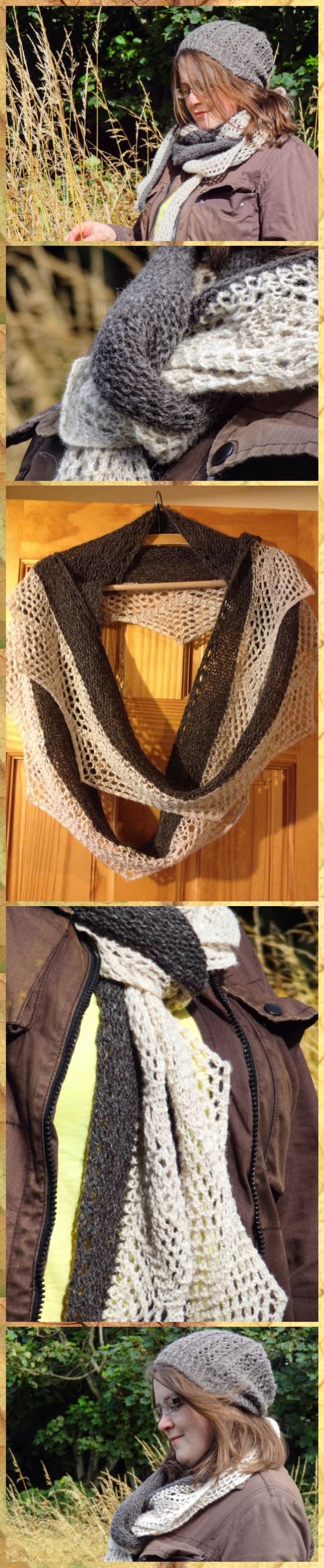
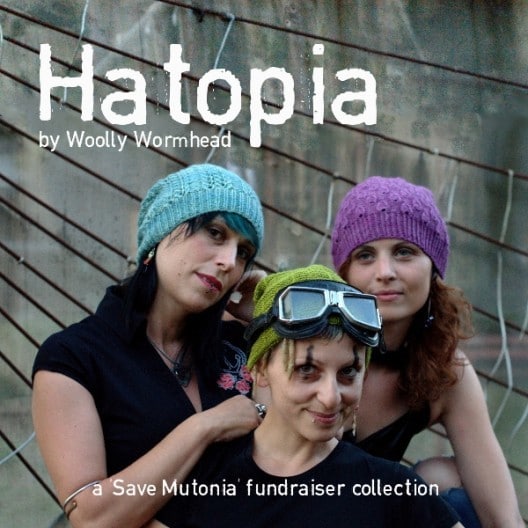
Of course, scarf season would not be anything without HAT season! While maybe not *quite* full-on hat season just yet, the one I wear is Woolly Wormhead’s Castiel, which I knit it in a looser gauge to get slouchier effect. (More on the wool in a later blog!)

You can buy Castiel in a collection called Hatopia, which is raising funds to save the Mutonia community where Woolly lives – not only is it home to many, it is also a work of art and forms the backdrop for all Woolly’s photo shoots.

If you are unaware of this cause, please do click on the link to find out more and you can directly help by buying the fantastic book, which is a limited edition – £7 from the £9 price-tag goes directly to fund-raising efforts.


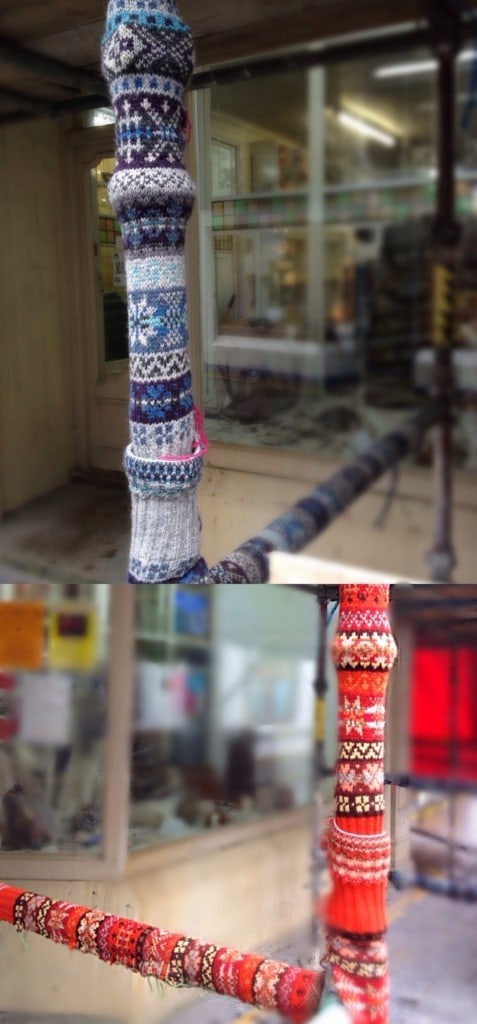
And on the subject of donning woollens, even local scaffolding is getting wrapped in wool! I was really tickled by this, outside of Jamiesons of Shetland shop in Lerwick!

So, no, I do not like the transition from light to dark nor cherish the thought of leaving for work in a strange half-dark and watching the sky just wash out in the evenings. However, we are heavily compensated with the gradual change in our surroundings.

In Shetland, sometimes you are lucky to have an autumn – we can go from summer to the wilds of winter fairly quickly. Last year it seemed the leaves were on the sycamores one day and empty the next! And yes, I do have a tree in my garden, several in fact! Shetland is not completely without trees. We can live on a scantily tree-clad landscape and still appreciate the change in the seasons.

If it can stay mild for a short time you really can appreciate the loveliness of a Shetland hairst in all its brief glory.

The heather is burning with colour on the hills, which does tell us summer is on the way out, so dreaded creeping darkness aside, bring on the full “season of mists and mellow fruitfulness”! Maybe that is why it is such a short season, so that we appreciate it all the more.

Colours of the landscape are very much in my mind now as I think about my next project…

What do you think about knitting when the seasons begin to change?

British Wool: Made by Ewe

One of the best things about this year of personal discovery into British wool – besides the wool itself – is meeting other people who also love British wool!

Linda from Made by Ewe got in touch recently to tell me all about her adventures in local fibre and as soon as I saw her delightful kits I knew that I had to ask her over to KnitBritish for a little visit.


Tell us a little bit about how Made by Ewe came into being.

I have been crafting ever since I was little. I remember the best birthday presents always being some kind of ‘things to make’ kit. Every year I decided people in the family had to have one home-made present as well as one shop bought present – the ultimate Christmas stress. My younger sister was treated to years of my attempts to recreate the lovely Jean Greenhowe dolls featured in the Women’s Weekly magazine – they were truly horrendous recreations but I enjoyed making them so much that I didn’t really notice if she didn’t like them!
I had a business for a few years in the early 1990’s designing handknitted children’s jumpers and then I didn’t really do much knitting again until 2010. I remember looking in the shops at the knitting kits available at the time and being disappointed by the quality of yarn included with the kits – mostly cheap and nasty acrylic, enough to put anyone off knitting for life! So I decided to create some kits of my own, using lovely pure British wool yarn. I put up a few for sale on etsy and was amazed when they started selling. I gradually designed more kits and set up the made by ewe website, blog, facebook page etc, and year on year the business continues to grow. I now supply a few shops too, which is very exciting, thinking of the kits sitting on shop shelves all over the country.

Your kits are really delightful and each definitely has its own unique character- where does your inspiration come from?

Inspiration from the kits comes from my subconscious. I think it must be a mixture of that childhood spent making things and cute things that appeal to me now. I also have a large collection of craft books dating from the 1940’s all through the 1970’s and 80’s to present day. I expect that leafing through the books from time to time sows seeds in my imagination that quietly grow into ideas.

The most popular kits are the Knit Your Own Sheep kits and I know that I spent a lot of time on holiday in Wales as a child picking sheep’s wool off barbed wire fences – such treasure and all for free too! I used to spin it on a drop spindle my Dad made me, dye it with plants from the garden and then knit it into suitable outlandish garments.
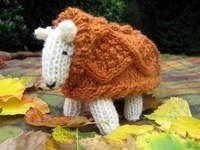
No doubt that influenced a general liking for sheep and the idea that their fleeces come off. Some of my customers have knit the entire range of sheep kits and they like them because the fleeces use different knitting stitches – cables, lace work etc – and they are small enough to practice the techniques without committing to a big project.

Everything inside the kit is truly British from stitches to stuffing. Tell us a bit about the breeds you use and how important it is to use British wool.

It is absolutely essential to me that all of the yarn in the kits is British. There is so much lovely yarn in this country, as you know, so why would you want to use anything else? I like to know that the yarn I buy is supporting British farmers. I also try to use as many other British things as possible – the stuffing is fleece from British sheep and the new tube packaging is made in Britain. The knitting needles are purchased from a British maker too.
The kits contain yarn from different breeds – mainly Shetland, Bluefaced Leicester, Gotland, Herdwick, Wensleydale at the moment. The Gotland wool is local to me, from a farm in Hampshire. I only have a small amount as it is quite expensive and it is very hard not to use it all up myself!


And you are also a partner in the Campaign for Wool, too!

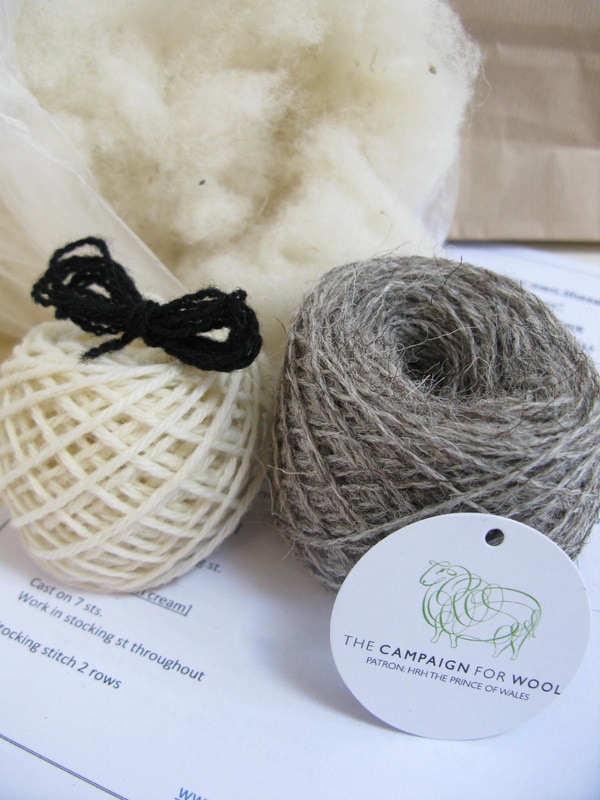
The Campaign for Wool was set up by Prince Charles to raise the profile of wool as a natural, sustainable fibre. I wanted to be part of the Campaign as one of the main aims of Made By Ewe is to promote wool. I am an approved partner, which means that the CFW have reviewed the business and agreed that I can use their logo and feature on their list of partner websites. I feel very proud to feature their little green sheep on my packaging.

Finally, you have a lovely range of British yarns in your shop – do you have any favourites that you like to work with?
I have lots of favourites and, as I mentioned before, it is difficult keeping my mitts off the stock! The Erika Knight British Blue balls of yarn are so soft and squishy, and the beautiful colours in the Jillybean skeins make me want to unwind them and start knitting to see how they look when knitted up. The British Naturals is lovely and earthy and felts beautifully so I am having a lot of fun experimenting with that. I also have a special skein of Skein Queen 4ply sock yarn in autumny browns and golds secreted in my stash, which is waiting to be turned into a shawl during my summer holidays.

ooOOoo

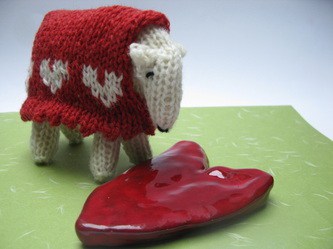
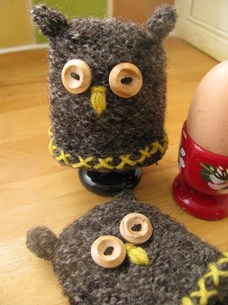
The kits – featuring sheep, bunnies, owls, teddies or teacozies – have wide appeal for new knitters to more experienced and I just know that younger knitters – or recipients of the finished item – will love that they can change the sheep or bunny’s clothing. Scope to create more fleeces and clothes for them…in British wool, of course!

Thanks so much to Linda – her love for British wool is really inspiring. It is wonderful to see that home-grown fibre is being promoted and used in such a fantastic way in the kits, but don’t forget that everything in Linda’s shop is British!


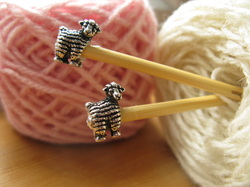
I am coveting these lovely and exclusive needles!

The kits are priced from £5 to around £10 and yarns start from under £3. All of which confirms that which I have blogged about a few times before – you can get top quality British wool products which do not cost the earth!

Please do pop along the Made by Ewe shop: and you can also subscribe to Linda’s blog too. Like Linda, as a child I loved getting those kits for Christmas and this year I will definitely indulge in a bit of my own personal nostalgia and give some of Linda’s kits to my neblings!

Washable British Wool: Part 2

Yesterday, I was looking at British wool and blends which can be washed in the machine.
Well, the gentle spin has finished and the results are in… some surprising!

First out was Jarol British Aran.

20130815-194640.jpg

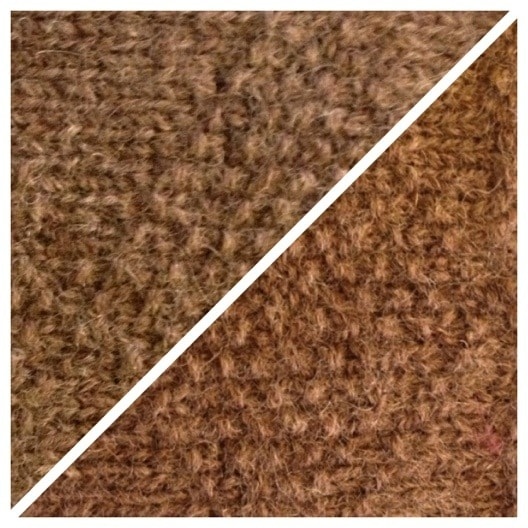
Apologies for the difference in light, the top one is before and bottom one is washed. I am really pleased with how this has behaved – it didn’t need blocking, just pulled into shape. It hasn’t shrunk and the appearance has not changed. That halo has bloomed a little, so perhaps it will pill eventually, but a bit of bobbling can be sorted. It bears repeating that anything woolly will want to bobble a bit after continual wear and washing.
I am really happy with this – will definitely use it again.

The other pure, machine washable wool was less successful in the machine!

20130815-195853.jpg

Do you remember I was so happy with the beautiful smooth, springy yarn with defined-stitches? The one I thought would wash really well…? Hmmm!
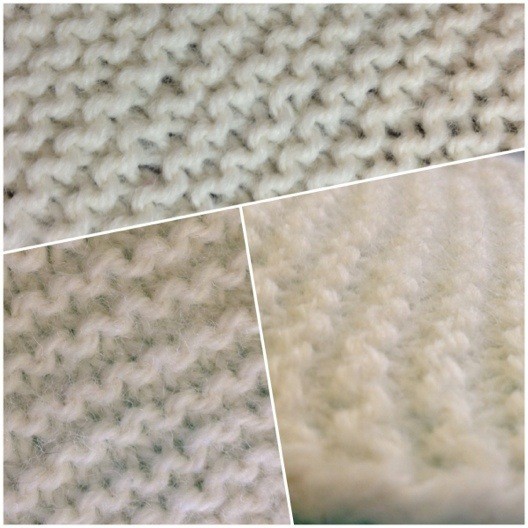
The ball band states machine wash in “not more than 30 degrees”, but I think you can see that machine washing at 30 has changed the appearance of this swatch.
It’s shrunk a little and the lovely definition has rather slumped into insignificance. It’s not quite felted, but it looks very different.
I have to say I am quite disappointed… I had a kids sweater queued up with this in mind, but I know the mummy won’t appreciate a yarn that will behave like this in the machine.
This British DK is still lovely and soft and worthy of any project – it feels really nice whilst working up, but I can now highly recommend hand washing a garment made from this yarn.

20130815-201206.jpg

My star buy – Woolcraft 60% British wool aran performed beautifully! No shrinkage and a really fantastic bloom. The best bit is that because it is mostly wool it has a bit more of memory and stretch than other acrylic blends.
I am really pleased with this one and I think all the neblings will have something made out of this at Christmas! The only drawback is that it only comes in the one colour. However, given its 60 % wool I think it might take a bit of dye… Experimenting to come, me thinks!

The last wool – the mostly (as yet unconfirmed as 100%) acrylic which is described as a British wool acrylic blend did not change in the slightest. It didn’t soften either.
Reusable bags, dish cleaning cloths, maybe dolls clothes, but not suitable for anything worn next to the skin.

20130815-203153.jpg

I have to say, it was quite difficult to find *British* wool with acrylic. There are a lot of acrylic blends out there – as Miss Jean Brodie would say, “for those who like that sort of thing, that is the sort of thing they like” – and you cannot knock their ease of care and their appeal to the purse strings, but there are only a few using British wool in any degree.

We have more luck with the washable 100% wools – from bumper 500g balls of Wendy Traditional Aran, the Jarol recommended here, dreamy Artesano British Chunky, to pretty hand-dyed, superwash yarns – you can find a washable wool for most tastes, washing machine settings and price tags.

As I mentioned last time, most machine wash wools will recommended hand washing too. It is up to you whether you take the words “machine washable” on their merit. If you don’t already knit gauge squares and wash these swatches you may not find out how these wools behave in the machine
As well as testing swatches it is equally important to look at the laundry instructions. Some will say wash at 30 degrees, some a gentle 40 degree wash, some will state wash on the wool cycle and some are even suitable for the tumble drier. Do pay close attention to this because a wool that has been treated may indeed be machine washable, but the heat of a tumble drier could destroy the coating and cause the wool to felt. Also consider the acrylic in your wool too, if using a blend high settings in the tumble could cause the plastic in the fibre to change and dramatically change the look and feel of the fabric.

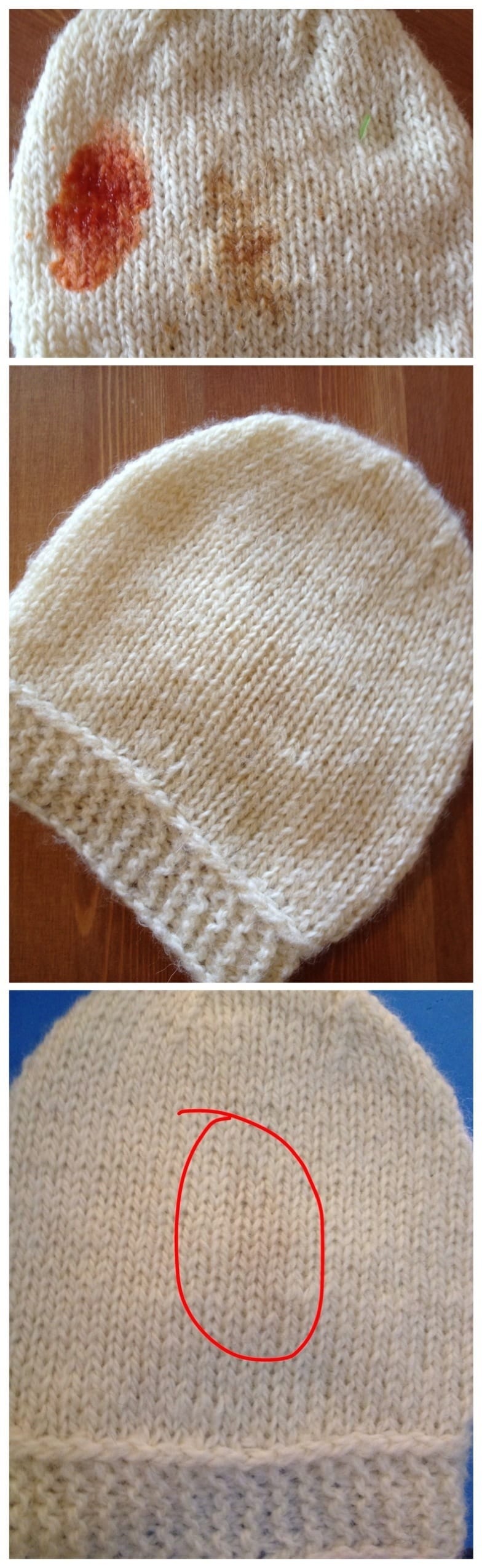
And what about that stained hat?
Well, you might not see it from the middle pic, but there is a slight coffee stain still there.

20130815-210538.jpg
However, as I am a bit cynical, I am pleasantly surprised that 90% of all that mess came out at 30 degrees! I will wash it again and keep you posted.

Please do let me know of your favourite British washable wools and blends. I found there was a bit of a grey area for British wool/acrylic blends, but if you know of any others please let me know!