Latest Posts

stereotypes, bandwagoning #ANDknitting

If you were reading twitter on Wednesday you might have seen the appearance of hashtag ANDknitting.

This was created by Kay Gardiner (@KayGardiner ) in response to a piece on the Guardian/Observer website entitled, Knitting and needlework: relaxing hobbies or seditious activities?

On the surface it looks like…could it be?…an article about knitting, written by a knitter regarding the practice from within the practice. No, it couldn’t be. What it was, in fact, was another lazy look at the “recent revival” in knitting and crafts. Recent? Revival? Is anyone else sick to death of the use of these words when it comes to knitting being mentioned in the media.

“Yes!” she said, upon discovering a rusty pair of needles in a dusty needle-roll in a museum vault and holding them aloft, “let’s start a knitting revival”, said no knitter. Never!

The author seems to be trying to dispel some myths about knitting, but ends up entirely ladling stereotype and cliché over a pile of yarn barf. Why, oh why, oh why does any mention of knitting HAVE to be accompanied by the association of grannies? There is even a large archive image of older women standing over the garden fence knitting, only strengthening the stereotype and image that knitting is the pastime of crones, with nothing better to do.

To add insult to injury the article continues on to state that, guess what? it is ok to be seen to be doing this thing, this “relic of women’s domestic servitude”, because Kate Moss and the Duchess of Cambridge have been seen knitting. High class and high fashion mean it is ok?  *resists urge to swear violently*

To say that this “recent interest” in knitting is due to high profile celebs taking up the practice is insulting, especially coming from someone who appears to be a knitter.  Again I say, why, oh why, oh why? Why, when there are millions of knitters out there, do journalists take the lazy and ill-informed approach  of barely scraping the surface of the thing? – interview people; look at Ravelry and its 4 million users; find your local knitting group; look how many yarn festivals, crawls and related events there are out there. Surely to goodness it is not difficult to see that knitting has been a hobby that has been enjoyed for many, many years by a diverse and varied bunch of people – all ages and both sexes – you might think that what you write is only going to be of interest to a small minority of readers, but arming yourself with a bit of research and info is a powerful thing!

Knitting doesn’t need to be revived!   Yes, there’s been a shift from occupation to recreation over the years and there are areas of the craft that one could say are on the wane. Here I mean very local traditions of knitting certain styles, where perhaps the main upholders of the style or patterns have passed on or  – like in Shetland – the decline of knitting in the younger generation as school budgets that accommodated its teaching were cut. However this does not detract from the fact that knitting never went away. It has boomed for sure, gone from strength to strength, gaining popularity and new inknitiates. While we may have seen the Kates knit in the news, perhaps it is only a recent interest for them!

I know I don’t need to tell any of this to the majority of you – but this kind of rainy day, space-filling pap really annoys me. If newspapers really want to fill space with interest in traditional crafts  – and traditional does not mean dust-covered and ancient! – then at least do a bit of legwork.
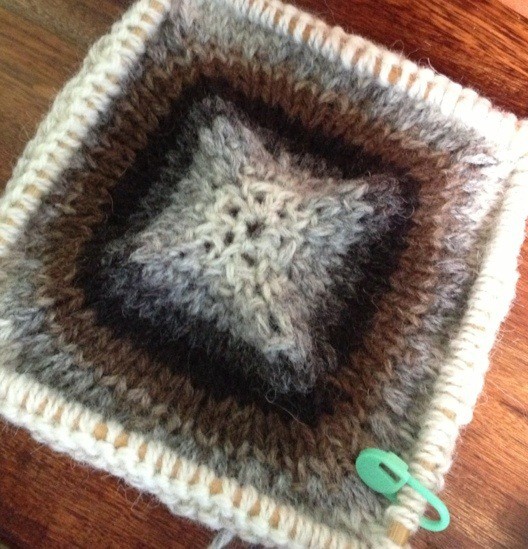
20130514-190849.jpg

look, a piece of knitting! it’s cool now, apparently!

That idea that knitting is cool now, cos trendy people do it (!) is further galling when the author makes a comment that knitting is something to do “for women who just have too much time on their hands”. Oh! and there is also the assertion that knitting is now art, nothing practical, or terribly useful – just art for lazy gals. I resist the urge to swear, but please feel free to use your own expletives here.

Another lazy omission – there is no mention of the importance and the definite rise in knitting groups  – a bunch lazy gals sitting around and knitting together  maybe doesn’t carry much interest for the author.

And the importance of thing which every knitter needs isn’t really stressed either. Oh, ok, wool and yarn are mentioned, but in reference to dusty boxes, spinning goddesses, weaving witches and Ghandi – which do you relate to more?!  How about a word on yarn from indie dyers, or any British yarn company? Revival knitters have no interest in yarn, right?

I now draw your attention to the sentence that craps over every knitter, every where, ever.

Needlecraft, it seems, is just not relevant to the reality of modern women’s lives.

Twitter knitters were incensed – some felt “stabby and crabby” –  and it was Kay who then  tweeted,

OK, just for fun and to educate @guardian : knitters tweet their other occupations with hashtag #ANDknitting

— Kay Gardiner (@KayGardiner) April 9, 2014

I urge you to read the #ANDknitting thread on twitter – although no amount of tweeting or blogging will make a difference to a newspaper who publishes lazily researched pieces, rather than something of real interest and substance – just you see how irrelevant knitting is to people’s lives.

I fonging love being part of this love-in of knitters, this tightly wound skein of like-minded individuals who, excluding that author, find that knitting and craft is not only something they do, but find it is part of them and connects them to so many.

Like I said when I reviewed Ann Hood’s excellent compilation, Knitting Yarns: Writers on Knitting, (on the latest podcast) knitting is about connections with others; those who taught us, those we now knit with or pass the skills onto. Knitting is learning. There are tough lessons along the way in the quest to create and perfect – not to mention the crazy maths, the decoding of instructions, the horror of realising a dropped stitch 9 rows back and the victory of managing to loop it back up through your garment to put it back on the needle!

For me knitting is something I have connections to in my family’s past, but it is also something I do for fun, for love, knitting for peace and for clarity and to push myself to learn new skills within the craft.
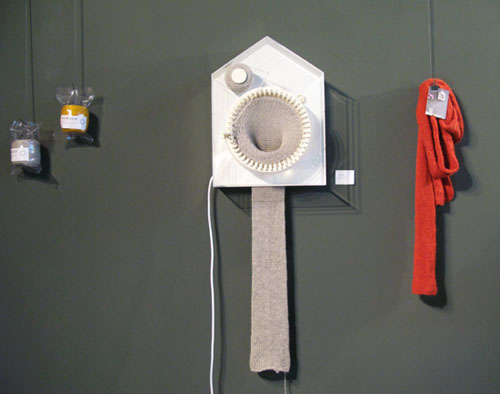
Norwegian designer Siren Elise Wilhelmsen’s 365 Knitting Clock

When you knit you watch the time that you spend doing it become something. There is the act of knitting and there is the creation of something – most people knit to do both, some knit to keep busy or find calm and others make a career of knitting.

There is knitting for art too (so neatly coupled with the idea of time, above), but do not for one second believe that because someone knits they are doing it to waste time or just because one has nothing better to do. (Nothing better to do is perhaps a good description of the author at the time of writing her piece on the knitting revival)

I also tweeted…

#ANDknitting people? Knitting people do not knit because celebs do. we knit to the click of our own sticks ( I am copyrighting that phrase!)

— Louise Scollay (@LouisebScollay) April 9, 2014

By that I do not simply mean that each knitter is singularly unique in their craft; we form a collective rhythm of clicking sticks. We blaze our own trails and, actually, have our own knitting inspirational figures, such as designers and those who work in the wool and knit industry promoting knitting a wool the right way! – although instead of knitting because they do, we continue to knit as we are inspired by what they bring to the craft.

From one riling, hackle-raising attempt at looking at an aspect of everyday culture to then reading #ANDknitting  – I feel even more secure in the knowledge that crafty people are the best bloody people in the world and while there will always be the uninitiated who say “hmmm, I wish I had time to sit and knit all day” or “Knitting? Like what grandma’s do?”  we will stand united, safe in the knowledge that if we really wanted to, we *could* impale them on our DPNS or throttle them with our circs, but we’ll quietly carry on, perhaps being the only ones lucky to truly know the revelations and intricacies of the knitting world we occupy.

Blogger, podcaster, library assistant, support worker, hollyoaks watcher, silly laugher #ANDknitting

episode 5: grab your oars

(This episode should be subtitled “The one in which I can’t say Ravelry” !)

UPDATE: Due to space I can no longer host the audio files on the blog, please use your favourite podcatcher, or right click the podgen link to open the podcast episode in a new window: Podgen

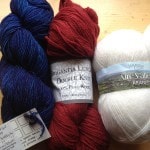
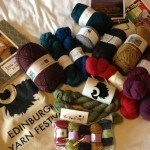
I forgot to tell you about the beautiful yarns I bought from Jess. I DID “know the Brigantia love”, thanks to Clare, as well as the love of Aire Valley and Jess’s own hand-dyed (the one I became attached too!) You can see a pic below.

Click on the pics for larger images. All images copyright.

A sunny Sunday stroll in Scalloway

Come on a wee walk with us….

IMG_4327

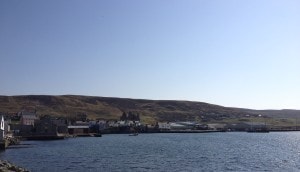
“see all the different coloured houses, sitting by the sea…”

IMG_4368

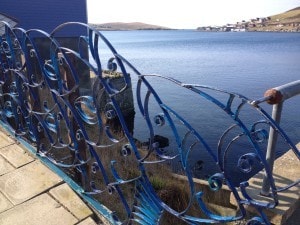
fishy fence

IMG_4371

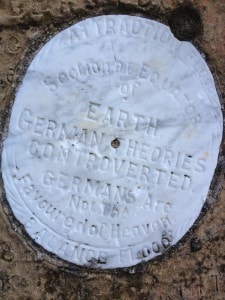
inscriptions on side of house from 1910 by local stonemason and amateur scientist William Johnson. Johnson inscribed several times on theories of the tide. Inscriptions can be read here

IMG_4380

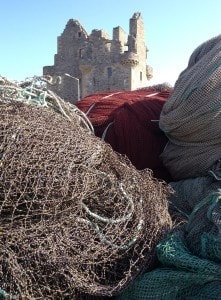
piles of colourful nets at the Muckle Yard, with Scalloway Castle in the background

down by the marina

IMG_4387

IMG_4383

bonny blue sky

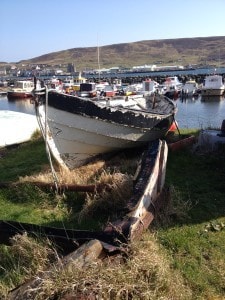
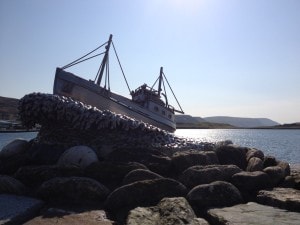
IMG_4382memorial to the Shetland Bus; the clandestine and dangerous operation of small fishing boats, which travelled secretively to Norway during the Second World War. They transferred agents out, under the cover of darkness, and brought Norwegians to Shetland who feared for their lives under German occupation.

IMG_4373

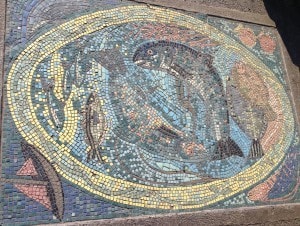
fishy mosaic work near the artist-in-residence studio, the Booth. The artist studio can be rented out here

IMG_4388

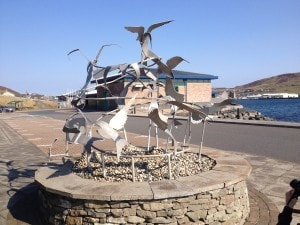
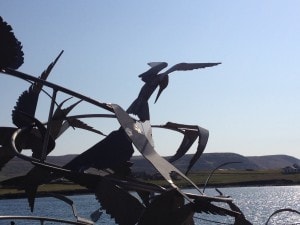
sculpture of terns  by Jo Redman

IMG_4390

IMG_4401[1]

ending up with Sunday teas at the local hall, in aid of the Scalloway Museum & Shetland Bus society. Lots of mam’s being treated to tea and cakes for Mother’s day.

I do so hope for more fine days such as this. In weather lore it is said that the last days of March are the borrowing days and the weather has been borrowed from April.

If all the days in April can be like this, I shall feel very grounded and happy indeed.

origin & ownership: thoughts on Fair Isle knitting

I have been musing for days and days and days on a blog. A niggly irk that has pinched at me ever since I saw this tweet from @kariebookish kb tweet My first instinct was to say that it couldn’t possibly be a Shetlander who said that – I was wrong, as I read in Karie’s own blog on this topic.

I was startled to see this misguided notion of ownership and origin and it has been the catalyst for these thoughts – my own and from some far cleverer people.

Firstly, I want to set out that I am obviously not an authority on the topic, but I have to say that when ideas on tradition are tautly stretched I feel my hackles rise.

I tweeted myself; “must things, where origins are unknown and variations are wide and fluid, be set up with rigid ideas?” That which we call Fair Isle can’t be rigidly authenticated like Harris Tweed.

It is used as a generic term which describes stranded colour work knitting. We know that stranded colour-work did not originate on Fair Isle  – some of the oldest knitted colour items date to Ancient Egypt  – but patterns from the isles, coupled with the style of garments which gained popularity in the early 20th C have encouraged the term to become used widely.

Fair Isle knitting incorporates motifs and patterns the same of which are found the world over including – to name but a very few –  Lithuania, Estonia, Finland, Norway and as far off as the Middle East. Look at this fisherman’s cap from Yell, on the left. This is a 1950s version of a hat that the knitter saw worn in the late 19th century at the haaf (deep sea) fishing. It is not a motif one would associate with Shetland and is possibly Estonian[1]

(c) Shetland Museum

(c) Shetland Museum

The story that patterns were incorporated into traditional knitting  from those who were wrecked on Fair Isle from the Armada ship, El Gran Griffon, is largely unsubstantiated and often pointedly denied by Fair Isle inhabitants. The first mention of Fair Isle seems to mention a style of hat very similar to the one above and comes from from a visitor to Shetland in 1832.

They were Shetland fishermen, the first I had seen, and I shall never forget the impression their strange garb made upon me. Dressed in their skin coats and breeches with their nether limbs encased in huge boots, they rather resembled the pictures we have seen of some of the Esquimaux tribes […] however the long fair hair of the Shetlanders, escaping in curls down upon their shoulders from beneath their large pendant caps of variegated worsted, certainly gave them a more picturesque appearance the the inhabitants of the more Northern clime.

Edward Charlton. Travels in Shetland, 1832-52 [2]

I suppose one could be fooled into believing that stranded colour-work knitting should be held aloft as something native to Shetland because knitting from Shetland has most certainly blazed its trail brightly.

The oldest article of Fair Isle clothing in the Shetland Museum & Archives dates from around 1850. It is dyed with madder and indigo. The bands of motifs are quite different from the popular 8 pointed stars,  flowers, tree of life and OXO patterns that we associate with garments we see today,

http://photos.shetland-museum.org.uk/index.php?a=ViewItem&key=SXsiTiI6MiwiUCI6eyJ2YWx1ZSI6Imp1bXBlciAxODkwcyIsIm9wZXJhdG9yIjoiMSIsImZ1enp5UHJlZml4TGVuZ3RoIjoiMyIsImZ1enp5TWluU2ltaWxhcml0eSI6MC42NSwibWF4U3VnZ2VzdGlvbnMiOiI1IiwiYWx3YXlzU3VnZ2VzdCI6bnVsbH19&pg=2&WINID=1488365997906#GxL6slFo9lwAAAFaiYTCkw/124489

(c) Shetland Museum

Interest in Fair Isle knitting came in the early 20th century when  Edward, the Prince of Wales, posed in an all over sweater. This undoubtedly sparked a boom in style and trend. I recently visited the museum to look at Fair Isle garments from this time. They are largely knit in Rayon, silk and cotton  – this would perhaps jar with that purist; if Fair Isle has to be made in Shetland by Shetlanders, surely it needs to be knit in Shetland wool, no?

Suddenly Shetland found it was in demand for knitwear again, but not for the traditional woollen hoisery, gloves and lace work that were previously exported in great quantities.

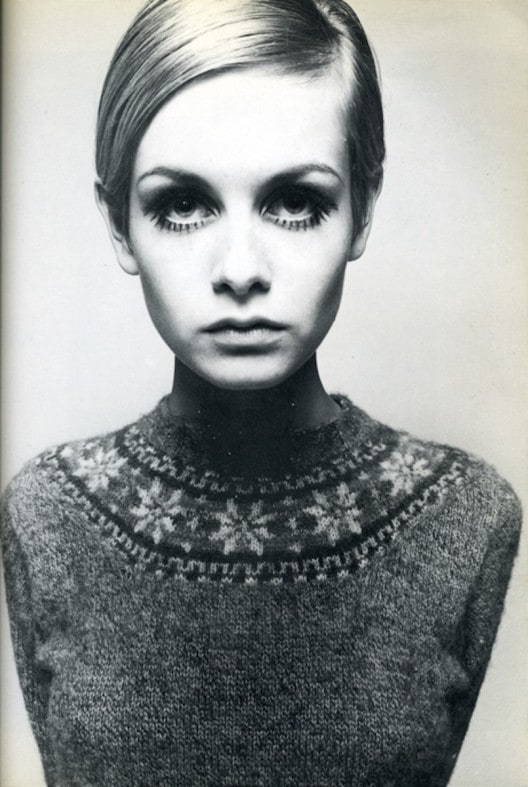
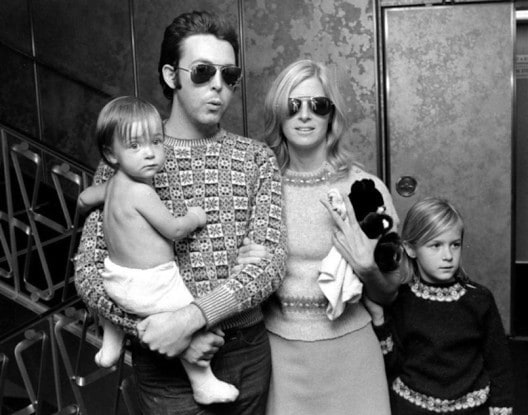
In the 1960s the colour motif yokes boomed and brought Fair Isle to attention of world again. fairisle1TWIG paul-linda-mccartney-children-1976 And again in the 21st century colour-work yokes are trending again.
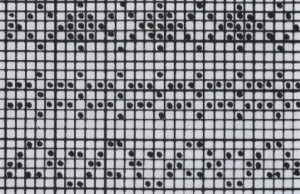
‘Traditional’ does not have to mean something rooted in ancient history and when it is an object like Fair Isle knitting we simply cannot state that it is an indigenous style and we certainly cannot say that practitioners of the tradition must be connected to its roots.

Is it right to use the  term ‘Fair Isle’ for so broad a discipline, is it suitable? Well, I certainly cannot answer that and I am not writing to this to say that it is appropriate or not. What I object to are ideas of rigidity in its history and the authenticity of how or where it is created.

Stranded colour knitting  has crossed many borders before it reached Shetland and has continued to cross and flow and find variations ever since. Shetland has always had strong links to the sea. It is no great stretch of the imagination to think how patterns made their way to the isles and vice versa. I recently learned that Faroese patterns were the first that Shetlander’s incorporated into their knitting, before motifs from Fair Isle were popular. It seems totally awe-some, but Shetland and Faroe had a rich shared fishing history, which occurred from the early 1800s.

Tradition is a carrying stream, as the wonderful Hamish Henderson theorised, it begins along its path; it ebbs and flows; it surges in places and dams in others; it cuts through new banks and all the while it accumulates and also beaches flotsam along the way. Tradition is fluid. It has a point of origin, but often this point is unknown and we can only trace it back to one of the bends in stream where it can be so different from where it first began. peeries The fact that this style has been knit in Shetland since at least late 19th has become a tradition itself, though it can never be wholly owned or set against other colour work as more authentic. It’s evolved and grown from fishermen’s keps to  ‘all overs’, to headbands, hoodies, wristies, gadget cosies, shrugs, etc. Just as the patterns and motifs have been carried on the stream, so too has the tradition moved and flowed to incorporate modern garments and needs.
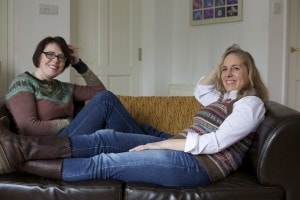
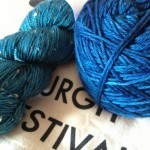
Change within tradition tends not to be revolutionary , or even rapid, but incremental, considered, evolutionary. That is not to say that radical new ideas or approaches do not appear within a tradition on occasions. They do, but time tends to be a judge, the barometer of acceptability, the arbiter of taste. Roots are important, as is an appreciation of where things come from, where we stand within the stream and how to use that knowledge to create fresh and meaningful art going forward. Tradition, then, can be of great use in a liquid modern world, a questioning, solidifying force […] it can still help us to move forward, to move positively and to embrace the future with the confidence that comes from knowing where we’ve been.

Gary West. 2012

I take issue with placing tags of ownership and origin on Fair Isle. Yes, it bears the name of an island (and for this reason may I be pedantic and insist it is always capital F, capital I and never lower case, hyphenated or one word) , the place where the first modern trend of colour work  knitting was seen to come from.  Just like guernseys to Guernsey, jerseys to Jersey…and West Highland Terriers to the West Highlands …ok, I know, its a stretch! but we can’t claim they all originate from that point of origin each and every time.

When something is fluid it can’t be blocked out aggressively, but it can find new variations, tributes and inspirations and hooray for that.

You may be thinking by now why I should care, the person who stated that Fair Isle knitting can only be done by a Shetlander is  a misinformed minority, does it really matter? Maybe it’s not the end of the world, but the ethnologist in me wants to look at the route of the carrying stream, the knitter in me wants to discuss the myriad of patterns and motifs from all over the world, that we (mostly) all call Fair Isle today and the Shetlander in me really wants to roll her eyes at another myth about the isles presented outside them.[4]

Fair Isle knitting is still done in Fair Isle and maybe we can direct the real purists here, where knitting islanders have possibly more links to the local tradition than others, but I will continue to refer to any colour-work as Fair Isle – capital F, capital I – and be proud to see history and geography crossing borders through each stitch as the pattern forms.

Footnotes

1] Complete Book of Traditional Fair Isle Knitting, by Sheila McGregor. Batsford. 1981 2] Travels in Shetland: 1832-52, by Edward Charlton. Shetland Times. 2007 3]Voicing Scotland: Folk, Culture, Nation, by Gary West.  Luath Press. 2012. P13 4] please don’t ever ask me if the weather is always crap; if we have running water/electricity; aren’t we all rolling in hoarded oil millions; don’t we have the best ‘quality of life’ on all those “surveys”; aren’t we all related, etc etc etc *eyes roll to oblivion*

Episode 4: Edinburgh Yarn Festival Exclusive

Welcome in dear readers and listeners and for those of you who may be listening and reading for the first time – hello and nice to see you.

Listen where you get your podcasts or right click the podgen link to open the podcast episode in a new window:  Podgen

If you have been following me or @EdinYarnFest on twitter or on Ravelry over the last couple of days, how mercilessly have we teased and tantalised you with hints that there  is something exciting to be revealed?

Well, be teased no more! I have the greatest pleasure of passing on to you some very exciting news – the date and venue of the Edinburgh Yarn Festival 2015.

Grab you diaries and a pen and listen in to a very special episode and interview with EYF organisers Mica Koehlmos and Jo Kelly. It may be shorter than usual, but I guarantee it is full of exciting news.

Jo_and_Mica

Once you have listened, head on over to the Edinburgh Yarn Festival Ravelry group and website to start the chatter and tweet with #EYF2015 !

So click play below, without delay!


(its also on the podcast app and on iTunes soon!)


Thanks for listening and thank you again to Jo and Mica for divulging the news EYF goers have been waiting to hear, with me!

If you want to hear more from the podcast, check out earlier episodes here, on the iTunes page and also via the Podcast App. Say hello in the KnitBritish Ravelry group, and you can find me on twitter too, @louisebscollay


reiterating resolutions

I had spoken on the first podcast about my KnitBritish plans for 2014, but I realised the other week that I had not reiterated that on the website and so let me set them out here 🙂

Obviously, I am still knitting British – no change there! Last year was my first year of this new knitting objective and so  I do have stash dating back to before KnitBritish. I am not going to leave that to the moths for another year and so while I will only be buying British wool, I am going to have to stash down at some point. There isn’t a whole lot and I actually gave a lot away, but I have some pretty nice skeins in there and I *am* going to knit them.

Knitting British to me means supporting all the ways and means of producing yarn in this country. I know I have said this all along and mentioned it most recently here, but it bears repeating.

To many it means just using wool and fibre that has been grown in the UK and that is excellent. I will continue to buy and shout about British bred fibre yarn and I hope by doing so I will be not only do a good turn in helping to maintain the flock, but also bring the wool and yarn to the attention of others who might do the same. There is an awful rumour going around that British wool is only good for carpets and while we export so much of British clip for carpets, we have an amazing abundance of wool that is soft, knitable and sustainable but also some of it is endangered or at risk of disappearing all together.

Blacker Yarn’s map of British sheep breeds

Britain has a long heritage of spinning and textile mills and I am happy to extend my remit  to any wool spun in UK mills. Many long established British spinning and textile mills  struggle to keep yarn production going in this country and fight to keep their heads above water facing stiff competition from global competitors. Let’s not forget those who operate small scale set ups too.

Happy am I to knit from farm to yarn and I also am happy to knit with wool from somewhere like Rowan that has been sourced outside the British isles, but has been spun using a traditional method developed by a UK mill. I do think about wool miles, but I also think about helping to support jobs in the industry in this country too.

That may seem like I am cutting this fabric to suit myself – again, knitting with only British bred wool is fantastic – we are directly helping to maintain the breeds in this country, and maybe even saving them – but I really do think we should think about all the connections of Britishness when it comes to the yarn we knit with. There are skilled workers, craftspeople and artists who are all involved in all stages of bringing the finished object to you. And not to forget your British LYS’s too. 

It is hugely important for me to include British dyers in my own concept of KnitBritish – I firmly believe that we should consider all the aspects of yarn production in this country and dyeing is most certainly part of the process and actually it is a blooming art-form and not only does hand dyed yarn compliment a pattern and garment, it can make it. I am constantly blow away by the high standard of hand-dyed yarn produced in this country. I think sometimes people think of dyed wool as some sort of fancy extra to the finished ball of yarn, some artful embellishment or hobby – and for some it may be –  but I really beleive that dyers are an integral part of producing yarn that we want to knit with.

Marin in babylonglegs dyed yarn

Marin in babylonglegs dyed yarn

Mezquita shawl in Assynt Storms by Ripplescrafts

Mezquita shawl in Assynt Storms by Ripplescrafts

I would be really happy to hear what you have to think, either in the comments or in the new KnitBritish ravelry group and if you are a mill, a farm to yarn producer, a dyer, designer, a general wool enthusiast, etc and you are interested in a guest post on what British means to you in wool – either in agreement with me or not (it’s not all about what I think!) – then email me via the contact page on the website. I would love to hear from you.

A new path for me is the podcasting adventure and I really want to continue on with this in 2014. I have loved doing the first few episodes and I am glad you’ve enjoyed listening to them. There are also regular features that I hope to bring to the podcast as time goes on and I would like to podcast and post more on the people and the places that I think are important to all aspects of knitting British – even more so if I can get the opportunity to get off Shetland to do it.

Of course, if all I did was this then you would have fantastically regular, newsy, informative posts and would be thinking, “where does she find the time to do it all?!” Unfortunately I have a day job and I have to pace myself with some of the things I want to do with KB and have longer term plans for other things. I hope that you enjoy reading and listening and I will keep you up to date with what I am doing,

I have been described as mounting a campaign with KnitBritish. I am not sure that’s what this is, maybe it is – I just want to do my small bit and hope that by blogging about it and podcasting that maybe others will too, or at least find an interest in it. There are lots of ways to KnitBritish and I am open to them all: its all about preference and seeing the different ways you can support wool and the journey to the finsihed object in your stash.

Oh, and no – for those who’ve asked –  you will probably never see a Union Jack in connection to KnitBritish, not on my site anyway. While the flag has always been a rubber stamp to mean “Made in Britain”, personally I have been sick to death of seeing it plastered over anything mildly British. It is definitely just a personal preference, don’t be sending me to the Tower!

Episode 3: The one without the creeping finger

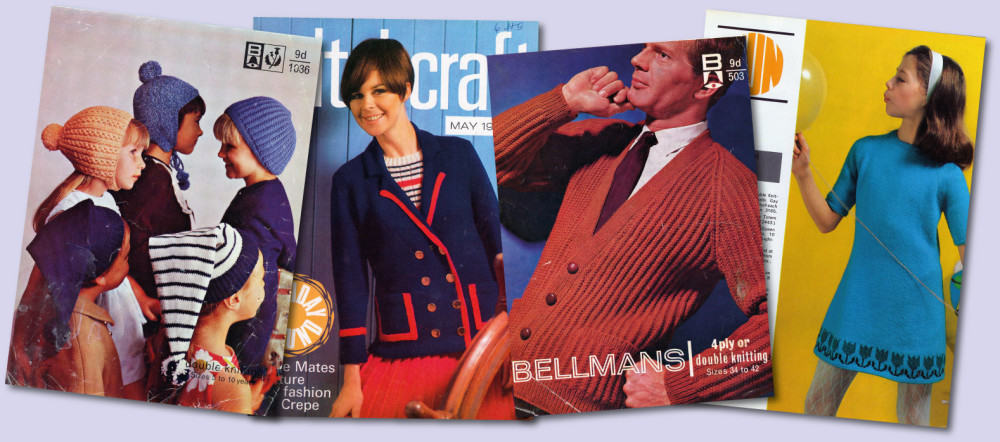
Do you have the creeping finger? As the title suggests I do not! All this and vintage patterns, art & film, the need to consume colour and very special yarn in this month’s podcast

Also  on iTunes

UPDATE: Due to space I can no longer host the audio files on the blog, please use your favourite podcatcher, or right click the podgen link to open the podcast episode in a new window:  Podgen

It was very difficult to catch the nuances of the Viola colours, but I tried to take several in different lights, so you can get a little idea.

Click in the images for a larger, lightbox view.