Latest Posts

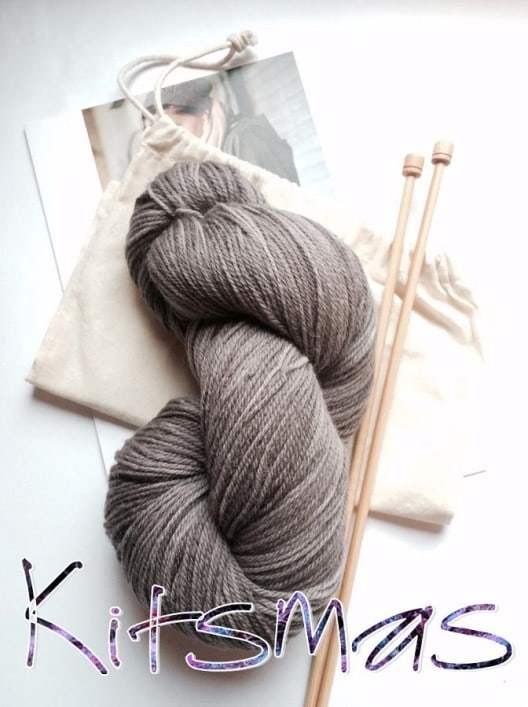
episode 48 Kitsmas clubs!

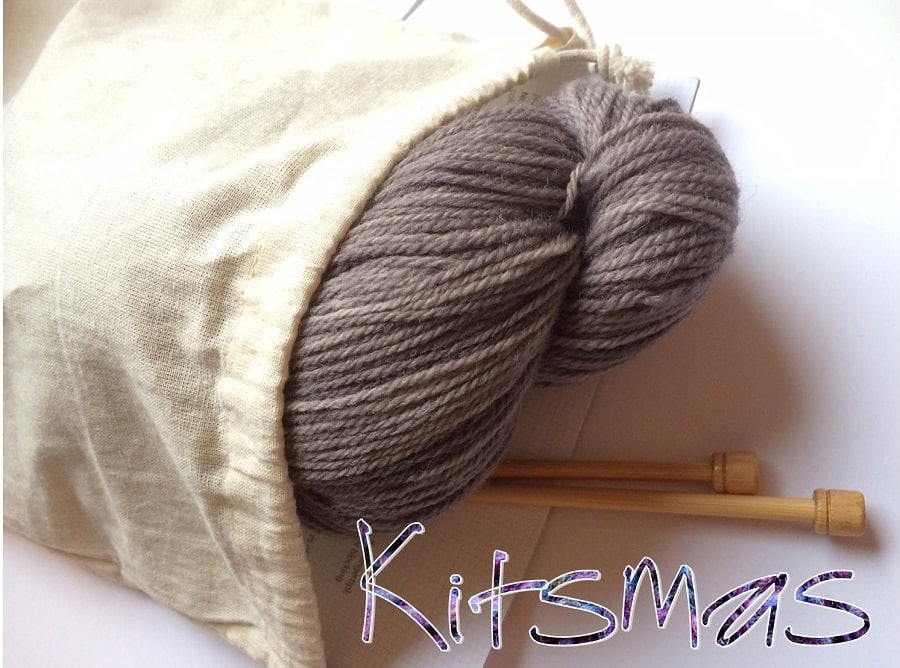
For the past few weeks I have had a focus on incredible kits that knitter’s will covet this Christmas. There are more posts to come too, but today I am extending it on the podcast and also want to talk about the kind of woolly gift that keeps on giving in 2016 – the yarn club!

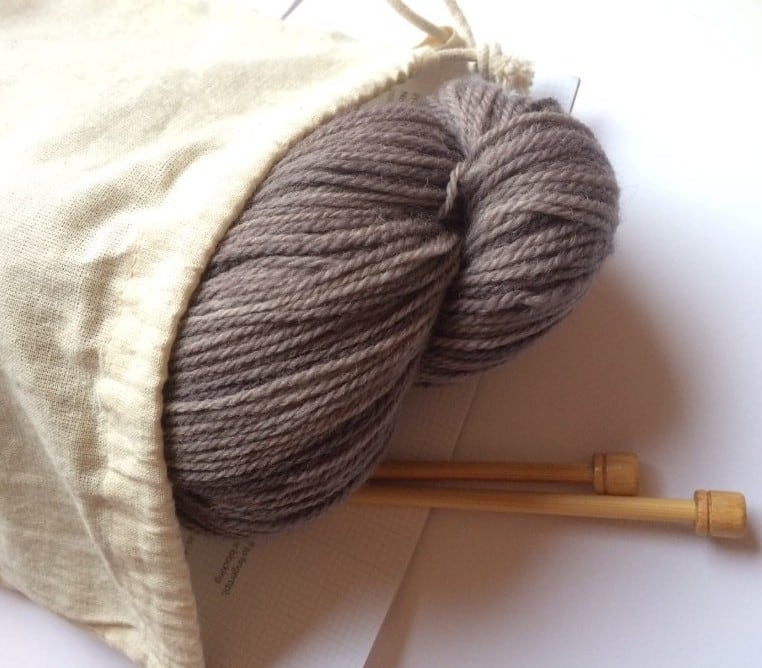
nss logoThe Neighbourhood Sheep Society is a yarn and pattern club collaboration between Jess James and Clare Devine.
The club consists of three instalments featuring the very best of British wool and fibre from
 local producers. The yarn is hand-dyed by Jess and there’s an exclusive pattern designed by Clare. Listen in to today’s show to hear Clare and Jess talk about the new club!

UPDATE: Due to space I can no longer host the audio files on the blog, please use your favourite podcatcher, or right click the podgen link to open the podcast episode in a new window

| The Neighbo(u)rhood Sheep Society

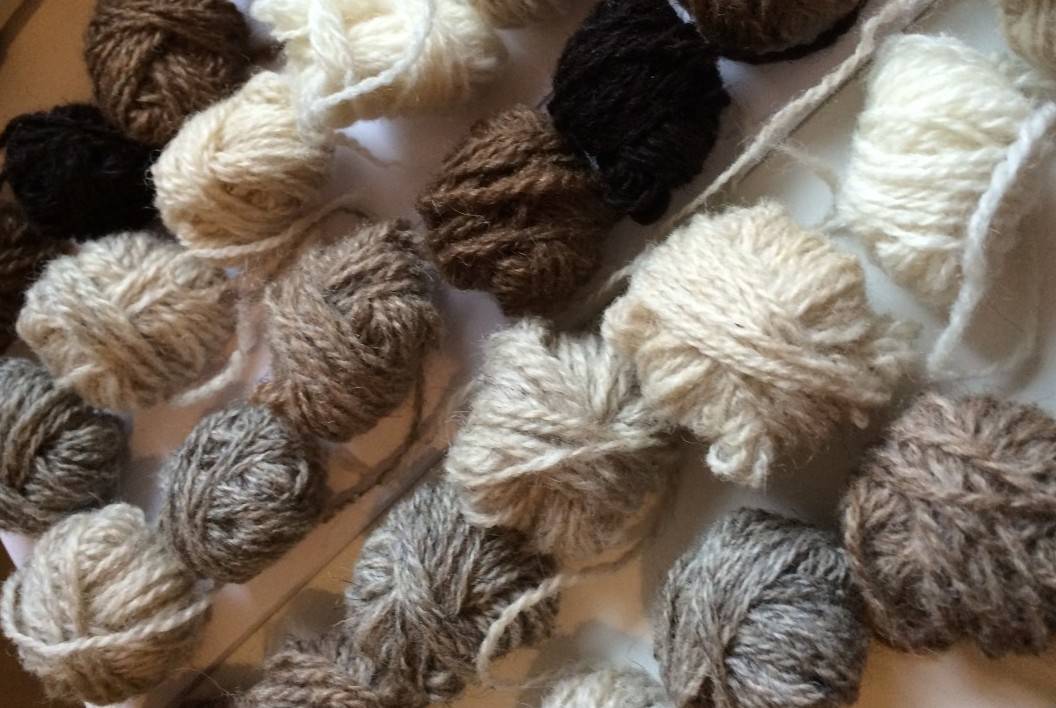
Listen in to hear Jess and Clare talking about the founding of this British wool and pattern club last year and what people can expect in the 2016 club. The club costs £85 for three packages and as a recipient of the club this year I can tell you that you can expect incredible collaboration of yarn, colours and design. If you need a taste of the 2015 club you can now also buy the collection of patterns.

| The Golden Skein 

This is a luxury yarn club which collaborates with independent dyers from around the world to create specially commissioned, themed yarn collections. Dyers work to a photographic inspiration and in The Power of Three club members receive three skeins, from three different dyers or three different bases. I feel that seeing the three different interpretations of the same inspiration source is a really exciting draw!

You can buy into The Golden Skein in a number of ways from one quarter to all four and there is also the slimmers club too. I am reliably informed by TGS owner, Jo Milmine, that 75% of the clubs are sold and when they are gone, they are gone, so do check out thegoldenskein.com today!

| Ripples Crafts 

This week Helen Lockhart announced that the Ripples Crafts 2016 club with be Yarn Notes from Assynt. This club was run this year and has been so popular that she is continuing it on next year. The club is a collaboration between Helen and her husband Stevan. The hand-dyed colours are inspired by the landscape and sites of interest around her home in Assynt and the club is accompanied by notes by Stevan. Stevan is a recent graduate in Scottish cultural studies and his notes contain historical, cultural, geographical, literary and sociological aspects of the area. I think that this is a lovely dimension to add to a yarn club – it gives people such an insight into the area local to the dyer and Helen’s inspirations.

In addition to that there are three different bases to choose from Reliable sock – a 75% wool 25% nylong blendl Quinag – a 4ply BFL and Suilven – merino, yak and silk! Prices for the clubs vary, due to the different bases and you can also choose a 3 month, 6 month or 12 month club. Included in each package is one skein of yarn and a picture postcard of the area which inspired the colours, as well as Stevan’s notes.

Annual clubs need to be purchased by the end of December, but the other options may be purchased at any time. Do visit ripplescrafts.com for further information. 


| Yarns from the Plain – Fibre Explorers Club

Perhaps you are more interested in making your own yarn and Nic’s Fibre Explorer’s Club would be a great way to widen your fibre horizons. Each month you will receive 150g of fibre, hand-dyed in exclusive colours. The tops will always be at least 75% British wool – some months it will be 100%, perhaps single breed, perhaps something new to you, perhaps a custom blend, especially for the club. I think this is a really wonderful way to explore British wool and fibre and would make a wonderful gift to yourself or the spinner in your life. 

Sign ups for Round one of the club are open, this consists of three instalments and the club costs £50. Please do check out yarnsfromtheplain.co.uk for more info. 

| Another few great clubs to check out (be quick with some of them!)

The Knitting Goddess Clubs 

Old Maiden Aunt 

Countess Ablaze yarn and fibre clubs

John Arbon’s Mill Membership Club

Hilltop Cloud Fibre Club

| Thanks 

Many thanks to everyone who told me about their clubs and with particular thanks to Jess and Clare for taking the time for a chat. MANY thanks to my woolly mucker AKA Felix Ford, AKA KNITSONIK, who gave me use of her woolly sounds (more of which can be heard on soundcloud). The baas you hear in this episode are from a mash-up featuring sheep at the Burland Croft, in Shetland, at Sumburgh Head and also from Estonia on the farm of Joel and Julika Roos. The baas have been mixed with sleigh bells. Because…you know…Christmas!

Information Music: Carefree by Kevin McLeod on Free Music Archive. Sleighbells via soundstack at freesound. Sheep recorded by Felicity Ford and used with kind permission. 

Natural Gradient Beauties: Five questions for Louise Tilbrook

I have really loved putting together the natural gradient series, particularly thinking about designs which play with colourful shades and then going au-naturel on them! When I was planning the posts I espied on Instagram the lovely Louise Tilbrook had released a new shawl pattern. 

2ihearstripes

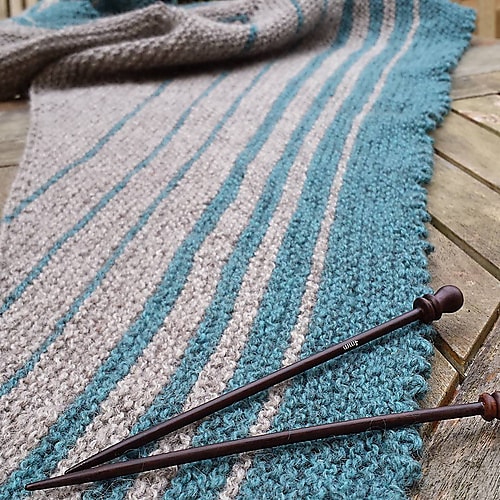
I Heart Stripes is a 4ply triangular shawl with warm garter stitch and a play of stripes of differing widths. The sample was knit in Blacker’s now-near-mythical Cornish Tin, which was so popular it sold out in no-time at all! You need 100g of a main colour and small amounts for the stripes – I saw it and I just thought….imagine those stripes in a natural gradient!  

I thought I would ask Louise to pop on over to KnitBritish for a quick-fire “five questions with” and tell us a little bit about the shawl, choosing colours and going natural!

I heart Stripes is all about fun and play, isn’t it? 
I love patterns that use up all the yarn, or which allow you to be flexible and use up leftovers. I wanted to create a pattern that was simple and straightforward and that people could adapt to put their own unique twist on it.

ihearstripes

Playing with colour is definitely evident in your design but I set you a little challenge to come up with some yarn ideas for a natural shade version. There are such a range of yarns and natural shades out there, so which breeds and natural palettes might you suggest and why have you chosen these?

I was so pleased with the results I got from the Blacker Yarns Cornish Tin, that I went straight back to their website to see what other, more sheepy shades they had. The Shetland DK really jumped out at me as having colours that would work really well together. The dark shade is really very dark, but having had a chance to play with it i think I can use it in a shawl design in a way that ties all the other shades together.

Another sheepy yarn which would work really well is The Knitting Goddess Britsock. Joy has some great dyed shades as well as a natural and I love how the very dark Zwartbles fibres show through the dye [in the 4ply British wool with alpaca range]- giving a really subtle heathered effect. So pretty!

The natural base

The Knitting Goddess British wool with alpaca – see those lovely dark Zwartbles fibres (my image)

I have heard from some knitters that it is harder for them to choose natural shades than colourful ones – did you find it difficult thinking “natural”?
I’m a big lover of grey so it isn’t too much of a stretch for me. It’s easy to think that natural shades just mean brown but when you look closely at natural shades you often see heathered hints of other colours. They are more subtle, certainly than your bright, jewel tones but no less beautiful for it.

Is your approach in design more lead by colour or yarn choice?
I tend to go for the yarn first, depending on the texture or pattern I have in mind, with colour being a secondary choice.

Has your exploration in the breedswatchalong helped with your yarn choices?
Definitely. I am much more aware of single breed yarns that I was previously and also of the diversity that we have in the UK. I recently picked up some Gotland 4ply yarn (again from Blacker Yarns) and am currently having fun designing a pair of socks with it.

Blacker Yarns have kindly offered me yarn support for a dk weight shawl to be released very early in the New Year. It uses the Shetland dk yarn and will be a warm, squishy, garter stitch gradient shawl – perfect for wrapping up in during winter.

20151123_131012


| GIVE-AWAY

Thanks so much to Louise for dropping by and leaving us with a tantalising image of her swatches for her latest design – if you are like me, I bet you can’t wait for that one!

I heart Stripes costs £3.60, and is available from RavelryDo also have a lovely browse in Louise’s Ravelry store – you are sure to find incredible sock designs, as well as shawls and blankets and Louise has offered one lucky reader their choice of pattern from her store! To enter go over to her Rav store and tell us which pattern you’d chose in the comments below. The give-away closes on 16th December. Good Luck! 

Images copyright to Louise Tilbrook apart from Blacker Yarns images and as otherwise stated

Whistlebare

PastedGraphic-3

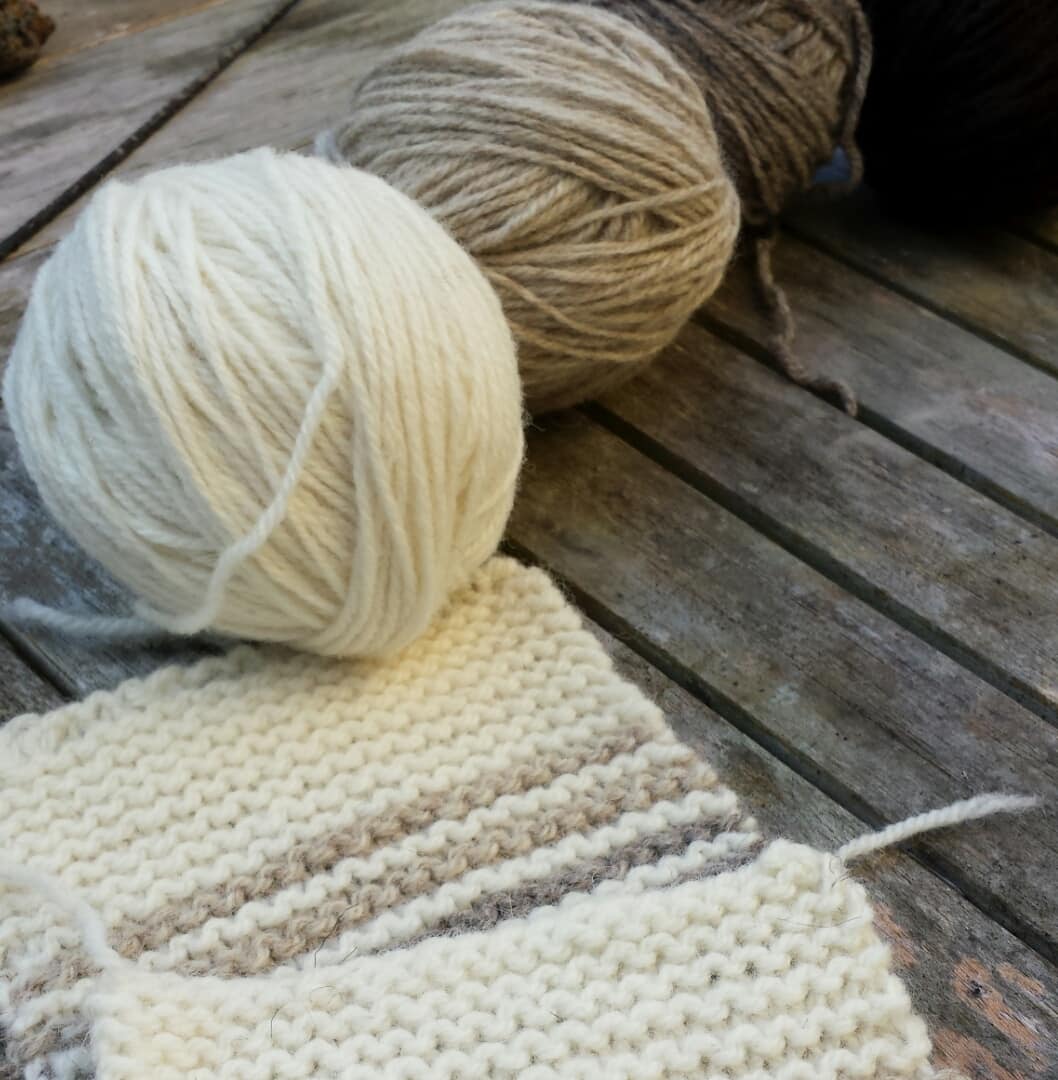
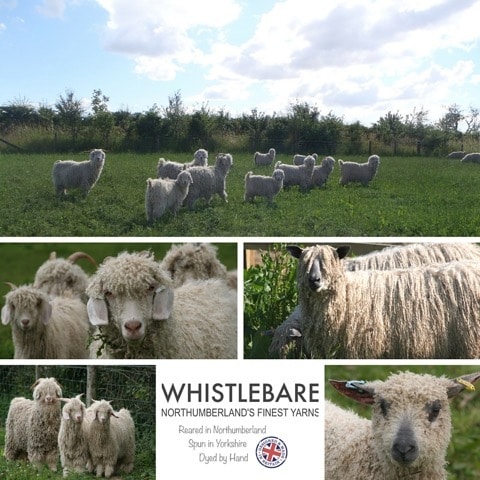
This week I am excited to tell you about Whistlebare and introduce you to Alice Elsworth. I met Alice recently in Edinburgh, but have had my eye on her fantastic home-grown, hand-dyed yarns since the Edinburgh Yarn Festival. The Yeavering Bell yarns are a blend of sumptuous fine kid mohair and Wensleydale, worsted spun and then dyed by Alice, in small batches. Available in 4ply, DK and Aran –  the yarn comes in a whole range of tantalising shades from deep saturated shades, to fresh tones and faded, heathered colours. What’s more there are incredible designs –  for men, women and children – and you can purchase these in a yarn and pattern bundle. I really love how there is such a lot of inspiration here in terms of variety of patterns. The prices start at £14.50 upwards and these would make a perfect gift for yourself or the yarn lover in your life. Read More

episode 47 and I knit socks now!

Yes! You read it correctly – I am finally knitting socks! This episode contains my socks-ploration, a yarn review of WYS Illustrious and a preview of In The Footsteps of Sheep, by Debbie Zawinski.

UPDATE: Due to space I can no longer host the audio files on the blog, please use your favourite podcatcher, or right click the podgen link to open the podcast episode in a new window

You can listen on iTunes, the podcast app, or search your favourite podcatcher. Read More

Kitsmas Shopping: Shawls and Cowls

Today I have a post FULL of Kitmas ideas for warm shoulders and necks!  Do remember to leave this post in full view of your gift-buying loved ones!

Sylvan Tiger is owned by Katie Pearce, who is an independent dyer from Yorkshire. Katie loves to dye with British wool and you may have read her recent post at Wovember about working with small flock owners to create stunning hand-dyed British wool yarns.

Katie dyed for designer Gwen Wagner-Adair’s Summer Flies pattern collection this year and has made the Anisoptera shawl available in her Methera lace yarn. The yarn is 55% BFL and 45% silk and the kit contains an 800m skein and the shawl pattern. I love the drench of the lustrous fibre and the shallow depth of the shawl.

The kit is £20 and is available from Sylvan Tiger’s etsy shop and I think it would make a perfect gift for yourself, or the knitter in your life.

Of course, if you have been reading KnitBritish blog posts this month you will have seen that I have had a focus on natural gradient designs. The Shetland Crescent shawl, by Kieran Foley, uses the natural shades of Shetland Supreme 2ply lace weight. It starts with just one stitch and features simple lace and stockinette stitches, which look stunning together and with those colour gradients the shawl is really striking. 

The Shetland Crescent is suitable for all knitters, particularly those new to lace. The kit costs £26 from Jamieson and Smith and you receive the pattern and the yarn required. J&S have an incredible range of kits, including lace, colourwork and cables; from hats to garments and mini-kits too.

logo

I stumbled on these Victoria Magnus designs for Yarn Undyed on Ravelry and was excited to realise that they are kits too. Yarn Undyed – you guessed it! – only use natural colour yarns and in their range they include beautifully soft BFL, as well as New merino (traceable and non-mulesed). I think these cowl designs are simple, yet elegant and really show what natural coloured yarn can do, including accentuating the lovely lustres.

Kits start at £12; Bentham costs £12 and Bretherdale costs £21.50. There are lots of other kits too, which might take your fancy. You can view them all at their website. Each kit comes wrapped in a box with your yarn and the pattern required. A little tip though – I am not going to lie to you – I find their website a little clunky. Though the images are beautifully presented you may, like me, find yourself furiously clicking images trying to find a way to add them to your basket…you need to click the price to be able progress onto that stage. 

logo (1)

If you like supporting British yarn sellers AND great indie designers this Kitsmas then you could have a look at the lovely shawl kits available at Tangled Yarn.

Pwani, by Clare Devine and Spontaneous, by Hanna Maciejewska are both available from Tangled Yarn in a kit and you can choose from an array of specially chosen colour combinations. Pwani is a deep crescent shawl, which features a simple yet effective combination of garter and mesh stitch. Spontaneous is knit with two strands of 4ply. It is BRIMMING with squashy garter stitch and slipped stitches at the colour change add to the interest in this shawl. Both would certainly cut a dash through the winter gloom. The yarn included is a merino lambswool and cotton blend and the resulting FOs will be as warm as they are light. The Pwani kit costs £18.99 and there are five colour choices. Spontaneous costs £29.99 and is available in 6 colour choices. If you need any help do contact Rachel,at Tangled Yarn, who can help with your questions and comments. 


I hope this has given you some tantalising gift ideas or has made your own gift list grow with more kits. Next Tuesday come back to meet Alice Elsworth and Whistlebare!

Goats & Sheep


Natural Gradient Beauties: part three – transmuting

Having looked at designs which highlight the very best of what Mother Nature gave our sheepy friends, I thought that it might be an idea to think about transmuting some of our favourite colourful designs into natural shades….Let’s go greyscale…and I am really feeling those greys today! (You may also see here that I use the term gradient a bit loosely)

Drachenfels, by Melanie Berg, is an elongated triangle shawl using slipped garter colorwork. It’s knit in a sport weight yarn.  Read More

Kitsmas Shopping: The Cornish Gansey Company

gansey co

Continuing my series highlighting wonderful craft kits for our Christmas gift list I am delighted to introduce you to The Cornish Gansey Company and Tina Barrett, the designer behind the company. 

I first became aware of the Cornish Gansey Company earlier this year. I am a big fan of the gansey; I have written about it before on here, and was lucky enough to see the Moray Firth Gansey exhibit last year. What I really love about TCGC is that Tina has really struck a balance with classic designs and also in contemporary patterns too.

This slideshow requires JavaScript.

With designs by Tina, Liz Lovick & Rita Taylor there are gansey inspired kits from sweaters – of course – to socks, mitts, cowls and homewares. Prices start at £15 and rise up to £100 and I was really blown away by the range available.

Ganseys have such strong connections between maker and wearer and I am also fascinated with how patterns travelled around the country with the herring girls and been transmitted in ways like this. Tina is keeping those connections alive and keeping the traditional stitch patterns evolving and so I was really eager to ask her a few questions about where her gansey inspiration comes from.

Make yourself a brew and join us for a chat – there is a tantalising prize at the end of this post!

Hi, TIna! First of all can you tell Knit British readers a little bit about yourself?
I am a Devon girl, married to a Cornishman and we have four children. I was originally a children’s author and have had books published by Hodder and Stoughton and also Paragon Press. Throughout my early life, knitting was my hobby. At some point, about 15 years ago, the hobby became my career and the fiction writing turned into my hobby.

Who taught you to knit, and when did that hobby become a career in designing?
When I was a child, both my parents worked, which was unusual in the 1970s but it meant I spent holidays between two grandmothers. One was a seamstress who made all our clothes and the other was an avid knitter. They both taught me their own particular crafts, but I actually loathed knitting as a child. Compared to my gran, I was slow, clumsy and impatient. She would knit a whole sleeve whilst I struggled with an inch. However, I must have persevered because I remember knitting at school (yes, I was geeky even then) but nothing ever got finished. Period.
My first foray into design was as a teenager. I would cut up sheets, tie dye them and cobble them together into what I thought was fashionable. Pennies were tight and I couldn’t afford Topshop! My first knit design was purely practical. Like all teens, I would be ensconced in my bedroom being anti-social. We had no central heating and I would sit in bed wrapped in a dressing gown and hat to keep warm. My nose would be freezing so I designed and knit a nose warmer which was a square piece of knitting with side ties. My mum just raised one eyebrow when she caught sight of me and I am not sure Prada will ever be sending them down the runway!

The gansey is truly a fascinating item – there is the construction, the huge spectrum of patterns, its incredible social history, to name just a few. How were you first introduced to it?
I live in Cornwall very close to the harbour village of Polperro. As I child, I visited often but only took in the pretty scenery and the good ice cream on offer. As an adult, I borrowed Mary Wright’s book, Cornish Guernseys and Knit Frocks from our local library with a view to designing a Cornish gansey for a magazine commission.

The photos intrigued me and as I read through the chapters I became immersed the social history surrounding the sweater. It was such a tough life living in the fishing community at that time and having visited Polperro so often, it was suddenly easy to imagine the women there working alongside their husbands when the catch came in, raising families and knitting every spare moment to raise extra income. As a result, when I did design and knit my first gansey design (for a child), I felt I was knitting a bit of our Cornish history into every stitch. It became a very personal piece of knitting and I still have that gansey now even though my youngest has long grown out of it.

The connections of knitting through the ages are so important to many knitters – do you think it was in your blood to explore the gansey tradition?
Possibly not, actually. I am from Devon and not Cornwall so I can’t even claim to be Cornish –  although my husband definitely is, so that makes me Cornish by default perhaps! And although all the maternal members of my family knit, they always used the cheapest yarn (sorry mum!) and easily sourced commercial patterns. Even now, I am teaching my mum who has knit for years, traditional knitting techniques she has never attempted to explore. She is just attempting her first gansey sweater in Herring Girl Pink and phoned last night to tell me proudly that she has managed twelve inches. Even knitting in the round is a big thing for her and she is a seasoned knitter.
No, I think perhaps it is the romantic in me that has led me down this path.Of course being a writer helps and I always loved the research part of that job. It was almost always more fascinating than the writing itself.

It is funny because my own mum is knitting her first sweater in about 30 years and encountering the same things!
cgc3

The history of gansey knitting is very interesting, isn’t it? 

I also volunteer in Liskeard Museum and am an avid history buff. It is not so much the ‘dead’ objects that fascinate me but the people who owned them and the story of their lives. Someone once told me the Gansey was a simple sweater ‘just a knitted sweater with some purl in it.’- unfortunately recipes were never recorded. Who on earth wanted to record a knitting pattern for a working fisherman’s sweater? Unlike the Fair Isle sweater, they were not worn by Royalty and decidedly unfashionable. They were common workman’s clothing and deemed unimportant. Even so, hundreds of women around the British Isles were part of the contract knitting industry trying to keep up with the huge demand for these sweaters between 1850-1930. All of the patterns were kept in their heads and passed down through the generations. Every member of the family was involved in knitting the gansey with the wee children knitting the rib (or traces), the middle ones knitting the plain with mother knitting the fancy bit on the chest and sleeve.

Every fisherman would have had two sweaters, one for chapel and one for work and many had their initials worked into the design. Although patterns were shared (or stolen from each other, as Mary Wright tells me wickedly) each sweater was individual, personal and many knitted with the wearer in mind. Has there ever been a knitted garment where so much thought was given to the wearer and then knitted into each stitch? It is the yarns behind the yarn that gets under my skin and always will do.

I wholeheartedly agree with you. I think knitted articles have a lot of stories to tell us and unlocking those like falling into a rabbit hole for me. I find the meaning in our stitches very powerful. 

The Cornish Gansey Company truly embraces the “traditional” but you have managed to also re-interpret gansey patterns in fresh and contemporary designs too. Can you tell us a little bit about how the gansey has inspired your design work?
At first, I used Mary Wright’s book as my bible and knitted two Polperro ganseys; one for an adult and one for a child. It was then my pleasure to meet and subsequently become friends with Mary Wright herself and I was anxious to check that my designs and sweaters were ‘correct’. When I nervously produced them and asked the question, she shrugged and said, ‘What is right? They look great, so yes, they are right and you have knitted them your way, just as the women did back then.’
I was very focused on being correct initially but Mary made me see that there is no right or wrong way with a gansey. Even the stitch patterns cannot be pinned down specifically to one particular village or area of the UK or even Holland. The fleet travelled, so did the Herring girls and so patterns travelled too. Her book was merely a record of the stitch patterns that she recorded from local photographs and she had named them according to the person or place in that photo but no one person or place can be credited with complete ownership. Even so, I was intent on using the traditional 2.25mm needles, the correct yarn and only double pointed needles just as our ancestors did and there are many gansey knitters all over the world including America, Canada, Holland, New Zealand and the UK who only work in the traditional way.
However, for many, the small needles, the heavy sweater and dense fabric can seem daunting even though they love the stitch patterns. So, my design work lately has become more contemporary using bigger needles and developing smaller projects such as hats, cowls, mittens and shawls. In this way, I hope to keep the stitch patterns alive and also to re-ignite the modern knitter’s interest into re-working this very humble classic.
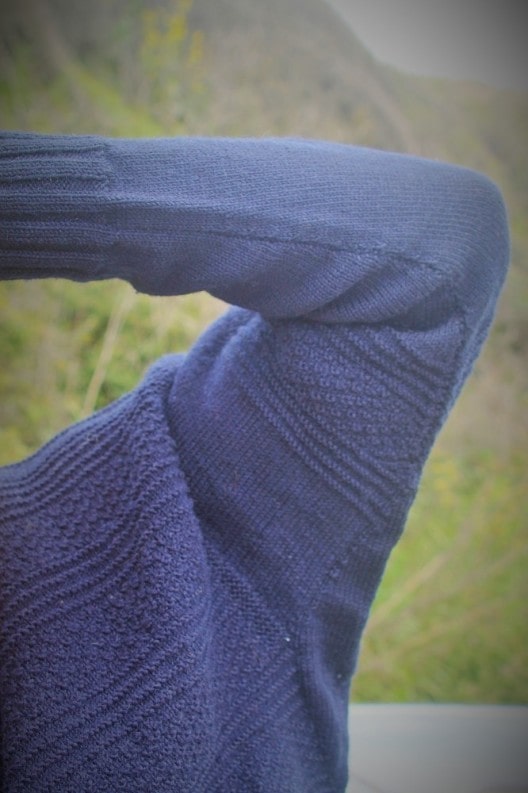
cgc9

Are there any stitch patterns that you keep on returning to?
Personally, I love the Polperro Seeds and Bars pattern and for several reasons. Firstly, it is the most commonly recorded pattern from Cornwall and Polperro, which kind of makes it almost ours (even though it is commonly seen in Whitby) plus it is the first design I ever re-created and knit so it’s personal too. It’s simple repeat (recreating sandbars and waves) makes it a wonderful entry knit for those new to Gansey knitting and I can highly recommend it.

You are using a very traditional yarn in your kits – can you talk a little about the wool you use and why it is so great for ganseys
I only stock Frangipani 100% British spun worsted 5ply Guernsey wool because it is the absolute best quality Guernsey wool on the market without a shadow of a doubt. It has the British Wool Marketing Board Platinum award which backs this up further. Owners, Russ and Jan Stanland have spent 18 years building their brand and they pride themselves on offering quality of service and product. They have experimented over the years with the spinning technique- settling on Worsted, the sheep breed – mainly Texel and also the colour palette- there are 28 scrummy shades on offer and it is stocked all over the world, including the tiny local store on Eriskay. I recently watched a wonderful programme on the Alba channel about an Eriskay lady who used their yarn to knit a gansey for the Pope and subsequently met him and presented it to him. So it is true to say that our yarn is ‘as worn by the Pope!’

That was an incredibly moving documentary, which not only showed the revitalisation of knitting a traditional island gansey pattern, but again the meaning and the power in our stitches. Marybell’s gansey was knit in a plain cream – perhaps suitable for a pope – but you are also experimenting with colours aren’t you?
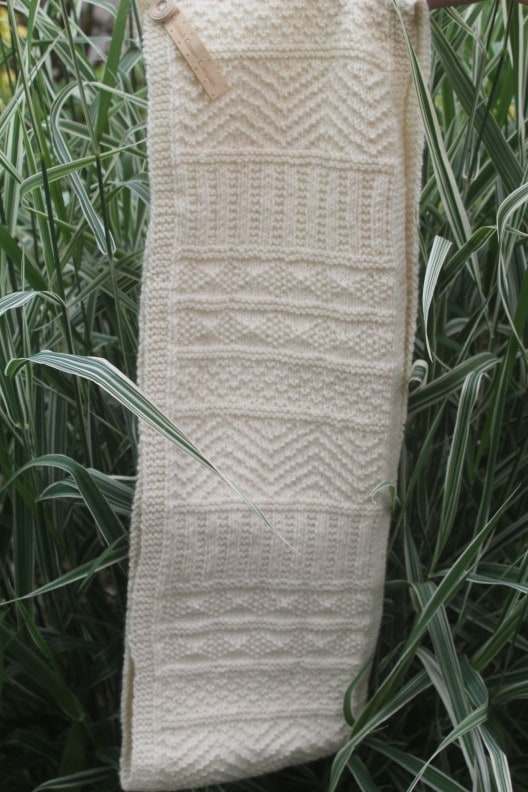
Traditionally, guernsey yarn is supplied on 500g cones and comes in solid colours. There is very good reason for this, namely that there are less joins in your knitting when tackling a sweater plus textured stitches are often ‘lost’ within a variegated yarn. However, many folk love the rich assortment of gansey stitch patterns but feel a gansey might be too much for them to tackle. For this reason I have spent some time designing smaller accessories such as The Crumplehorn Snood, which is a sampler of traditional gansey stitch patterns and also the Polperro Snakes and Ladders Beanie which really shows off the texture stitches to the full, but are more portable and worked on slightly bigger needles than a traditional gansey sweater.

In this way, I hope to move things forward and interest the modern knitter into exploring further the history and techniques involved in this little modest working man’s sweater.
Controversially, I have also decided to introduce some gradient dyed skeins to the yarn store (coming very soon) which I feel may lend themselves beautifully to shawls and wraps. Purists may not approve but I think the dip-dyed effect will still show off the stitch patterns and provide a modern more contemporary edge.

What else is included in your kits?
Each gansey sweater kit comes complete with yarn on the cone, 5 x 40cm long 2.25mm steel double pointed needles plus a comprehensive step by step guide to knitting the sweater. It is in full colour and walks the knitter through each stage. In addition, I also provide three laminated charts for the patterned chest and sleeve straps. The kits come complete in a sturdy carrier which can also be used as a project bag.

The accessory kits come with yarn, usually in a ball plus a full colour pattern booklet and additional photo tutorials of techniques. These kits also come in a sturdy carrier.
We also stock a great range of yarn, historical books, DVDs, needles, patterns, shawl pins and traditional knitting sticks and a range of kits from top designers and gansey specialists, Liz Lovick and Rita Taylor.

Do you teach any workshops, or will you be appearing at any wool events? 
At present, I seem to be popular with our local branches of the Women’s Institute, many of whom are avid knitters and crafters themselves. I am always happy to host workshops and to give talks on this most fascinating of subjects so please get in touch via the contact page of my website if interested.

Thank you so much, Tina, for dropping along to talk about the incredible gansey and all of its forms. I think I will always be fascinated by the multitudes of patterns and the incredible history of the garment.

It is really wonderful that you are helping the gansey tradition keep on going and evolving with these beautiful kits – whether you are buying a kit for yourself or a loved one, or buying it to make for a loved one that idea of “passing on” traditions and emotional ties are still present. 

Ahh Thank you 🙂


| Amazing Give-Away 

Now, I know you were all reading that and thinking that there is a gansey kit out there for you. or for the knitter in your life. With the selection at The Cornish Gansey Company there most certainly is – and I think the prices of the kits and the quality of the items included are exceptionally good value and they should get on to your gift list pronto. HOWEVER, Tina has been incredibly generous and has donated a kit as a give-away prize.

Tina has sent me a Crumplehorn snood kit, worth £19.99, with the Breton colour of Guernsey yarn to create your own special gansey project.

To be in with a chance to win this lovely prize this Kitsmas, please visit The Cornish Gansey Company shop and tell me which other items might make their way onto your gift list – kits, patterns, yarn, books, dvds? Just leave a comment here and tell me which! You have until the 20th December (til 12pm UK to enter and I will post out the prize in the New Year. The very best of luck and so many thanks to Tina. 


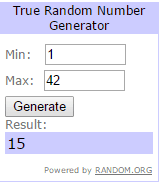
UPDATE 23-12-15: I did the random.org draw today and the winner is comment 15 – well done, Linda Rumsey!

gansey kit

episode 46 and the meaningful knits

UPDATE: Due to space I can no longer host the audio files on the blog, please use your favourite podcatcher, or right click the podgen link to open the podcast episode in a new window

This week I am back with an episode looking at the Breed swatch-along, a new feature on the stories behind our stitches and I give you the low-down on the Edinburgh Yarn Festival, if you are planning a trip to Scotland’s yarny capital next March!

Today’s episode is sponsored by Edinburgh Yarn Festival. Scotland’s premier knitting event is being held from 17-19th March 2016. With world class tutors, a packed marketplace with hand-picked vendors, meet-ups, demos  – and the Podcast Lounge – Edinburgh Yarn Festival is a must on any yarn-lover’s calendar. Click on the logo to visit the website and do sign up for their email newsletter.

You can listen on iTunes, the podcast app, or search your favourite podcatcher.

| Shownotes 

Thanks so much for your feedback on the last episode of the podcast – I am sorry, but I did say from the outset that I would be doing some heavy enabling, so take no responsibility for larger ravelry queues. Also many thank for your feedback about the blog this week on the natural gradient series and the new Kitsmas Shopping posts.

kitsmas3

Meaningful Knits 

This is a new semi-regular segment of the podcast where I ask people about the stories behind their hand-made items. Did you make it yourself? Did someone make it for you or how did you come by it? Maybe the story is in the construction or the techniques used or it reminds you of a person, a time, or a place. While in Shetland I spoke to a lot of people about their meaningful knits and I hope to record more. Today we hear from Marylin Healy, who took part in the 5000 Poppies project in Australia. Listen to her short story of the project and how just a very few stitches have connected so many people from all over the world in tribute of remembrance and respect. IMG_6438

Edinburgh Yarn Festival

It is a mere 17 weeks until the next Edinburgh Yarn Festival! Have you booked, or are you still swithering a little? This year I was a visitor to Edinburgh (though now a resident) and I give you my wee run down on tips for starting to plan your journey to Edinburgh. You can sign up for Train Ticket Alerts and if you are going to be staying in the city you should definitely think about booking your accommodation now to try and secure an early-booking discount. There is a great thread in the EYF Rav group on this very topic. I mention three brands of hotels (cheap, middle of the road and a few pounds more), which I have used and can reccommend, but AirBNB is also a great place to check out, particularly if you are coming to town with friends or family. I also talk a little about the venue, what you can expect there and the wondrous Podcast Lounge too. I hope you are now planning on going and that we see you there. If you are going what will you knit? I started a thread on this topic and you can pitch in and tell us which knitted item we may be able to recognise you by at EYF2016.

Breed Swatch-along and Wovember

Hello to any new swatchers who have joined in since Wovember, it’s lovely to have you join in. I have enjoyed reading the chat thread so much and watching the reviews in progress. So far we have had North Ronaldsays, Herdwicks, Shetland, Ryelands, Manx, Castlemilk, Norfolk Horn, Navajo Churro, Icelandic, Welsh mountain, Gotland, Leicester Longwool, Llanwenog, Wensleydale, Suffolk, Teeswater….the list goes on and it is really exciting to see how people are discovering wool like this for the first time.

This is my Suffolk swatch, which needs a final wash, block and wear test, but you can read my ongoing notes here.

If you live near Glasgow I will be at the Queen of Purls on November 28th when Zoe hosts a charity event for The Big Issue. Other lovelies Leona from Fluph, Jess from Ginger Twist Studio, Amanda B Collins and Jules from Woollen Flower will all be there and I will be there with my British wool samples, to give you a little wool tasting! If you are so inclined you can bring knitted items, such as hats and scarves, to donate to Big Issue vendors in the city, or 8X8″ squares which will be sewn into blankets to try to help keep Glasgow’s homeless warm this winter. 

| Next Time 

I will be back around the 27th with more of the same kind of woolly fun, including yarn and book review. Don’t forget about the ECY giveaway, which you can enter over here. Don’t forget to check back to KnitBritish to keep up to date with upcoming blogs, or sign up for email updates on the right hand menu, under the sponsor image.

| Information 

Music used: JS Bach Cantata 208/Sheep Shall Safely Graze, Kevin McLeodSmiles Throughout The Sky  by Kai Engel – both from Free Music Archive.