Latest Posts

Wee Highland Fling

I had a very short dalliance with the Highlands this weekend.

The Highland Wool Festival has firmly been penned on my calendar since Helen, of Ripples Crafts, tweeted about it last year.

The festival was held at the marts in Dingwall and it is just pure fate that my good friend (and once landlady) lives a stones throw away. What an opportunity to seek out wool as well as blether a-plenty?
It was also the perfect opportunity to eventually meet some of the people I’ve been tweeting with for yonks.

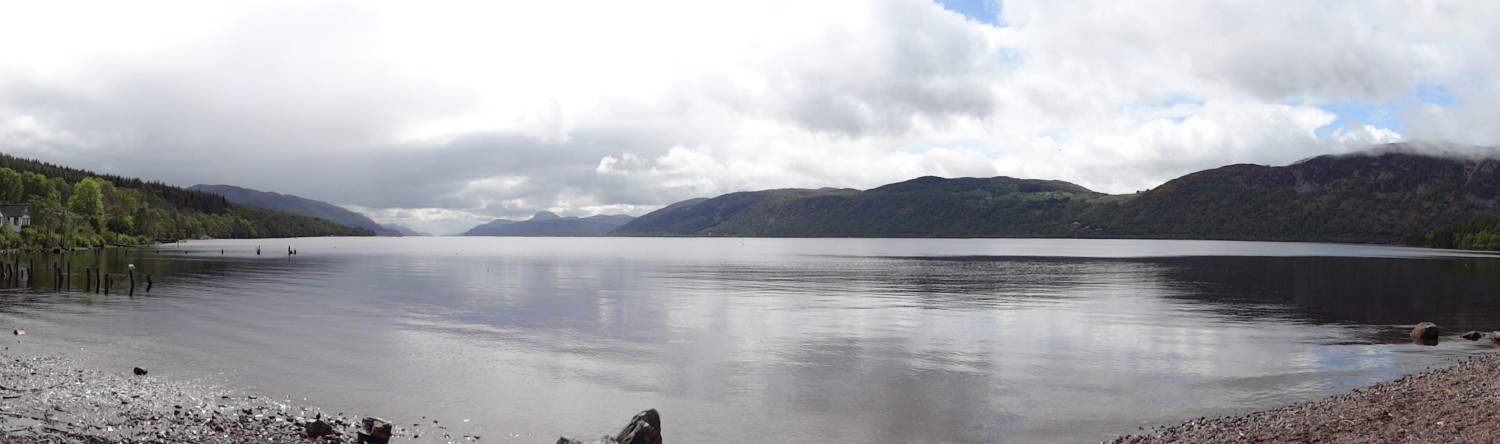
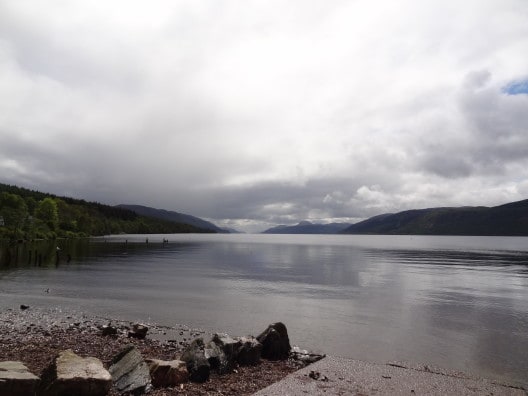
When I arrived on Friday morning my pal met me at Inverness Airport and we whisked off for a lovely coffee before a really lovely drive around Loch Ness* side. We *were* looking for the wee beach at Dores but ended going much further on a wee adventure. Cue lots of lovely, scenic winding roads which were absolutely ablaze with colour and growth – broom, blossom, bluebells galore!

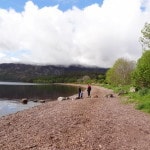
When our stomachs got the better of us we made our way to the Dores Inn – what a bustling place with lots of customers and charm, a sign of good food I’d say. We found the wee beach eventually and walked off our lunch while taking in the loveliness of a Loch Ness.

DSC01860

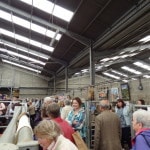
Saturday saw the first ever Highland Wool Festival and I was really excited to attend. For the past few weeks I had kept up my mantra of, “you don’t really need wool” and, to a degree, stuck to that.

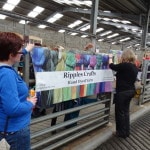
I’ll discuss the day in the next podcast, but it was particularly nice to meet Louise Hunt, from Caithness Craft Collective, her lovely wee ones and her fantastic mum! I also got to meet again the lovely Kelly, who some will remember as doing the Charminglochie podcast, she was helping her mum man the Cairngorm Bags stand (and I might have just bought something for the Caithness Craft project bag swap). It was also great to talk to Helen from Ripples Crafts too, a very lovely lady and a very talented one too – her stall was very well attended. I also said hello and met the lovely Louise and George from Yarn Garden, we had a lovely chat for a future podcast too.

I will speak about purchases and things on the next podcast (hopefully up at the weekend) but I truly had a great day chatting to people and stall holders. I didn’t spend *much*, but I really enjoyed the day and I really hope there will be a second Highland Wool Festival: the organisers did a top notch job, big well done to absolutely everyone involved.

After the fun at the Marts, I went back to my pals house at Conon, where we actually lounged in the sun (20 degrees!) and watched a Red Kite soaring after his supper. An amazing weekend, in all!

* we did not see Nessie.

knitting the journey: 2

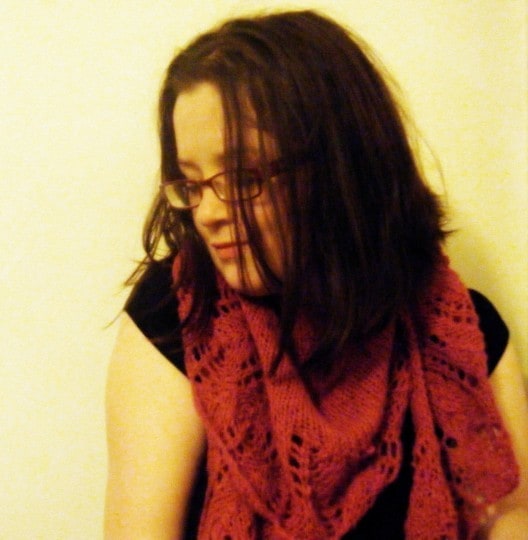
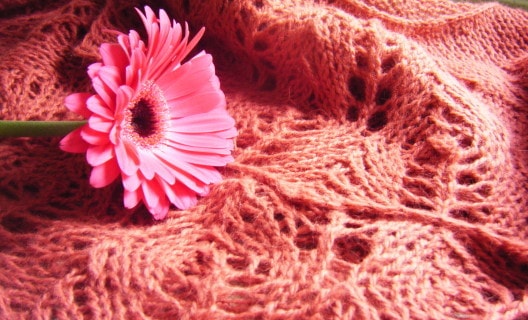
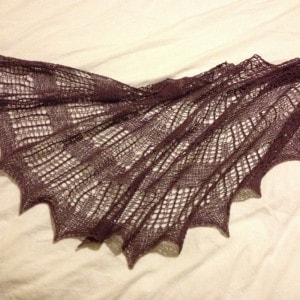
This is the Mezquita shawl. This was the first time I knit anything with holes where there were meant to be holes. This was my first shawl and it was the first time I wrestled with blocking anything bigger than a hat!

me mezq

For about three years I had learned stitches, I had knit scarves, hats, cowls, wristies…even made up a pattern or two. I was also beginning to feel like I had begun to near the surface of that deep hole. Behind me was a lot of hard work, counselling, medication, learning to forgive and realising that you don’t need to forget, but you can lessen how raw it is to remember.

I had gone back to Uni and, living with my best friend who had gone through a similar situation, I was finding camaraderie  and even humour in what I had been through. I had come to realise that I was pressing on.

Not only was I utilising the tools that I had learned on my journey I was really keen to go further in my knitting too.

As I learned to assess potentially worrying situations rather than hide from them, I also learned to read (and re-read) patterns before casting on. Too many times before – with patterns and with situations – I’d either run off at a gallop and miss the finer points, or avoid it all together thinking I couldn’t deal with it.

I learned that I had to go back along my lifeline and tackle some people and issues that I had either run from or not dealt with sufficiently in the past. So too did I learn the importance of realising when you have made a mistake and knowing whether it can be rectified or abandoned. Many times I could start again, other times I turned a new page in the pattern book and saved my precious yarn for another special project.

I learned how to block (hmmm! I always feel that blocking is a learning curve!) I learned that wool grows in a way you don’t really expect and that it is malleable. I realised that while I had felt so low, so lost and so deeply packed into the bottom of that hole, I had taken those experiences – pinned out all those sharp points  – and I could look at what I had achieved.

The Mezquita shawl was knit in Artesano Inca Mist  This was the first time that I knit with a yarn that wasn’t sheep wool based; baby alpaca, soft as kittens, gliding through my fingers, in-around–through-off. It was the first time I spent a bit more on my wool, the first time I thought about the yarn and the garment in connection to my senses and the first time I was knitting an item that I really wanted to look beautiful and be eye-catching. I was opening up to the idea that I was allowed and deserved lovely things (…cue thelovelyfella soon after that)

Knitting is a form of therapy and can be a life-line in times of crisis, frustration, anxiety and in challenging times. I think often of that first ball of acrylic and every time I use my first pair of needles I think of why I bought them. I think of how far I have come since buying them, the things I have lost, but also the things I have learned  – so wide and myriad, both practical and emotional.

I am not writing this to say that knitting was the cure; I needed support, counselling, medication and lots and lots of time during that deep bout. Neither do I mean to say that knitting saw off depression for good -far from it! but I do feel now that when I start to see the Black Dog at the corner of my eye I feel better equipped to kick its arse. 

Truth be told, my anxiety and I haven’t been the best of friends recently and each time I have had to reach for the Rescue Remedy, medication or  take some deep cleansing breaths there is the need to knit soon after –  just a row or two to focus and steady.

I have mentioned that lovely book Knitting yarns and my favourite essay is Barbara Kingsolver’s Where it Begins (you can read it via the link, but I highly recommend the book) -She is dead right; knitting needles are my oars, steering through life’s waters with a lifeboat of yarn.

DSCF3888

I still wear Mezquita and wear it with pride. I was very conscious when I was knitting this item that I was knitting my butterfly wings.

: : : :  

Thank you to the lovely @KatySwiftKnit for making me aware that this week Is Mental Health Awareness Week (12th-18th May). This year their focus is to make people aware about anxiety; to understand, manage and overcome the anxiety which can impact on our daily lives.

Anxiety can be debilitating, it can floor you, it can take you far away from your comfort zone within seconds and an attack can last over half an hour, leaving you exhausted for hours afterwards. With anxiety can come tension headaches, muscle pain and tensing, dizziness, nausea, racing heart and breathlessness. If you suffer from anxiety, do see a doctor or seek advice, there is a lot of support and assistance out there.

Please visit the Mental Health Awareness website for helpful information and find out if there are any events in your area.


knitting the journey: 1

Earlier this week I wrote about how knitting can be a useful activity when you are trying to quit smoking. The driving force behind writing that post came from thinking about this one, really… how that action of in-around-through-off; steering yarn around the needles can provide focus when distraction is rife and can bring calm to chaos.

Listeners to the KnitBritish podcast might remember my review of Knitting Yarns: Writers on Knitting, compiled by Ann Hood and how many of the contributers wrote of how knitting assisted them through so many of life’s ups and downs and how learning to knit – though providing its own challenges – can have “healing powers”. Ever since reading this book these ideas have been swimming around my head, confirming and making me evaluate what I have always known myself, through my own experiences and ruminating on a blog post.  I say ruminating, as although I do write-from-the-heart-and-shoot-from-the-hip, I do find it hard to tackle some personal topics. 

Knitting came into my life when I was in quite a dark place.  I had just come to the realisation (for realisation read breakdown) that I was suffering from depression –  I hadn’t dealt with my grief following my dad’s death and also due to the fact that  I was dealing with VERY unwanted attention from someone, I also – in my infinite wisdom – decided to give up smoking. (phew! how was that for opening up?!)

Looking back, I was definitely punishing myself with giving up smoking. I was in the bottom of a deep hole and wanted to replace all the things I felt were happening to me, with something I could self-inflict. Do you understand what I mean by that? I felt I needed to bring some other kind of pain on myself that I could control. It wasn’t right…and consequently, of course, I didn’t kick the habit that time because I could punish myself more when I gave into the cravings.

My first piece of knitting from this time was truly woeful – I knit better as a child, before I let it lapse! As I explained in the last post, I had bought some purple acrylic and 4mm long needles and I hadn’t gone into the shop to get these, but I knew on some level that I needed to buy them. I needed to try something, Having spent a good deal of time remembering how to cast on, I began to knit. I wasn’t fooling myself, I wasn’t attempting to knit a garment. I just wanted to knit.

For about 2 weeks the knitting sat in the arm of my chair and every ill thought, every pinch of fear, every moment of uncertainty, every rise of panic there was a stitch made: my stress and anxiety were in those first attempts and it was evident from my tension. Some rows I could barely get the needle in the stitch, it was so tight around the needle. Other stitches were so loose and rows so miserably knit that the loops gaped. I was completely and utterly frustrated by what I was going through and also at my lack of knitting skills. Whatever I was knitting was becoming curved on one edge, much to my annoyance, and after asking my mum why we realised I was knitting into the back of the last stitch!  I couldn’t even bloody knit straight! I decided I would cast off and start again and then I cried for hours when I realised I couldn’t remember to cast off.

It could have been so easy to not bother any more but, like I said, I knew I needed it, I was seeing a doctor and waiting to see a counsellor; although I felt my problems were far from over I knew they were somewhat in hand. What wasn’t quite in hand was the ordering of my thoughts and I felt I had no focus. I could have no thoughts and I could have a million. I knew I needed something to train my thoughts on. I knit scraps of garter, stockinette and rib;  I cast off and on and threw away mistakes too quickly, not realising there was a certain (eventual) satisfaction from learning from one’s mistakes.

I didn’t realise that there was a huge knitting community, In the early stages I was just knitting to knit. I didn’t even tell anyone that I had learned to knit. It was my secret solitude…In-around-through-off…steady stitches for steadying thought. I never thought I could knit to make something useful at that point. but as my mind calmed with that in-around-through-off and as I began to focus on my time by the the reassuring click of needles, I started to wonder if I could do more. A colleague told me about Ravelry and my eyes were opened to putting my new skills into making something that I might be able to actually wear…

…And that forms part of the second part of knitting my journey.  

I said earlier that I was ruminating on this post and It was the comments on the Stub it out and Cast it on post that helped give me the nudge to write it, particularly Jackie’s comment;  

Knitting can help you through all sorts of things, for me it was the thread/yarn that kept me connected to the world when I was in the deepest darkest well of depression, I’d even go so far as to say it cured me, but it’s probably safer to say that knitting allowed me to own my depression, rather than to have it own me.

This is the kind of function that knitting can serve – a life line, an honest-to-goodness anchor when everything else is in flux – and I guess that is why I get inordinately soap-boxy when the media  relegate knitting to grannie stereotypes and celeb fads.


Knitting can get you through.


stub it out and cast it on

This weekend I was thinking that I’d like to write a post on the power of knitting and how it can really help get you through some tough situations…and maybe a bit more on that later in the week, but it was fortuitous that as I was thinking about writing this post I saw a tweet from designer Erika Knight about her wool being used in something fantastic called the Knit Quit Kit.

The kits are designed by Vanessa Bracewell; she had smoked for 30 years and in the summer of last year decided to give up. Vanessa turned to knitting to help beat the cravings of nicotine withdrawal and soon struck upon the idea for the kits. You can read a bit more about her story here.

When I decided to give up smoking I was already having a tough emotional time. I was wandering aimlessly in a shop one day when I was passed a display of Patons FAB. I randomly selected a ball and some 4mm steel pins. I say randomly because I guess it wasn’t what I had gone in for, but it was intuitive on some level because I knew I needed something to get me through.

I was driven to despair with nicotine withdrawal and by all the connections I had to nicotine and smoking: I had a cup of coffee and so I wanted a cigarette; I finished a nice meal and so I wanted a cigarette; I was waiting and inordinately long time for a bus and so I wanted to smoke; I was feeling hugely emotional and moody due to the effects of nicotine withdrawal and so I wanted to smoke even more!

I needed something to do with my hands and during the cravings this was even worse. I had knit as a child and always been around knitters, but as I sat with my purple acrylic and my long needles I realised I had forgotten how to even cast on! How I wished there was such a thing as Vanessa’s kit then!

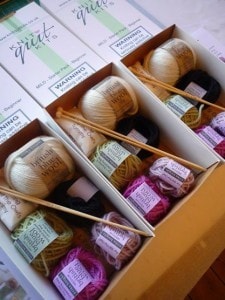
The kit contains everything you need to help put your mind and hands to other challenges when attempting to give up smoking, from easy to follow patterns, bamboo needles, pretty cakes of Erika Knight’s British wool  and all the accessories you need to make the three different kits; an owl keyring, knitted bracelets and a drawstring purse kit.

knitquit


As I mentioned, the cigarette packet style boxes contain British wool from Erika Knight’s British Blue Wool range – 100% British blue face Leicester. I can’t think of anything nicer for these kits. BFL is soft, lustrous and knits like a dream…it’s also machine wash at 30 degrees!

Erika has a fantastic attitude toward yarn and wool and one I can totally get on board with;

My ethos is simple: to keep sheep grazing our beautiful landscape, to promote our unique British sheep breeds and to make it all here in Britain, producing a distinctive British product. Wool is naturally soft, comfortable and sustainable, making it the ultimate fibre for the hand knitter.

I wish I had discovered the wonders of wool for my first skein, rather than acrylic. I now know the sensory wonderfulness of knitting with BFL and how soothing a fibre that will be in the pursuit of knitting to calm the senses; gliding through the fingers like buttery silk.

Thankfully, after discovering Knitty I managed to remember how to cast on and I was off. Every time a craving hit, or I felt my mood change due to smoking withdrawal I knit another little bit. It helped immensely.

It took another attempt at it before I gave up for good (and IT IS for good!) but knitting was truly helpful: it gave me focus when I thought my only focus was on smoking and before I knew it I had a new addiction!

Are you thinking about stopping smoking? Maybe you have recently given up and struggling, like I did, with cravings or with the total mind-bender that is nicotine’s effects on the brain. If your hands are looking for something to do and you think a new hobby could help you, then seek out a Knit Quit Kit.

My first bit of advice though, is find your local smoking cessation group. Some people baulk at the idea of sharing the horrors of quitting smoking with a group, but give it a go – you are four times more likely to stay stopped and honestly, while knitting was a saviour, it was the support of the group, the help of the trained NHS staff and the nicotine replacement therapy that helped me. Going cold turkey is fine for some – even cold turkey + knitting –  but many of us need a bit more to help us kick the habit.

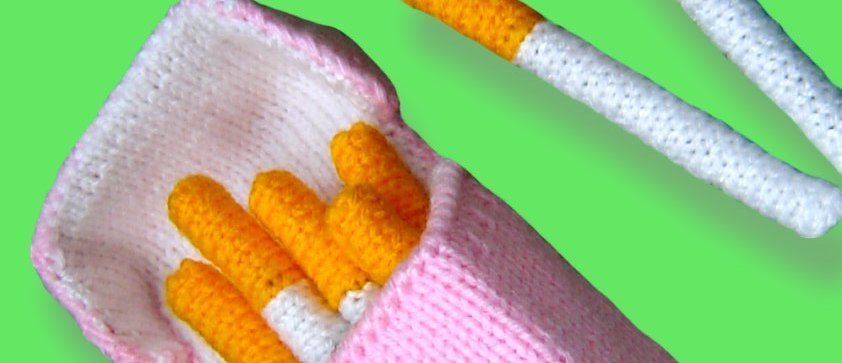
Clare Scope-Farrell’s knitted cigarettes (free pattern)

I am so entirely pleased to see Vanessa’s fantastic initiative and thrilled that the contents are full of yarny goodness that supports the British wool industry.

I like that these are beginner kits, as giving up smoking is a good incentive to start a new hobby – but there are also plenty of  knitters out there who might want to give up smoking too. Perhaps a kit aimed at a more experienced knitter would be a future plan… something to treat oneself with for reaching your quit date, or an incentive to keep going  – we can easily be swayed with yarn, y’know.

The Knit Quit Kits costs £17.99 – which is roughly the cost of 2 packets of fags – and I know that Vanessa has been inundated with interest and there has been a bit of media coverage in the last week. Well done to her, I hope the kits help lots of smokers become ex-smokers!

If you are thinking about quitting, have already quit or have stopped for quite a long time then well done. It is a hard road and not an easy course, but there is a lot of help available and lots of people who have gone through it to cheer you on.  Its a hard thing to decide to quit and it can take an impetus to stop that resonates with only you.

Maybe more on the power of  knitting later this week.

: : Further Info : :

You can buy Erika’s British Blue Wool from great retailers such as Made by Ewe and Tangled Yarn. There are also some of the colourways available on the Knit Quit Kit website

Please check out the NHS for information on stopping smoking and there are also some helpful phone lines you can call for advice.

 

finished things

I realised the other day that I haven’t been talking much about WIPs and FOs on the blog, rather talking about them on the podcast. I realise that some of you read, some of you listen and some of you do both, so I hope you do not mind if I revisit some recent FOs and tell you a little more about their lovely yarns (Although, you may have to forgive the odd selfie. Camera-toting fiance’s weren’t always around)

: : Gaither : :

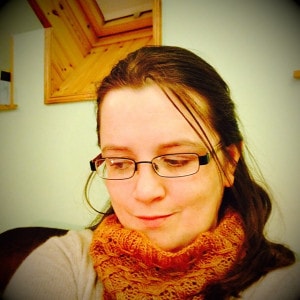
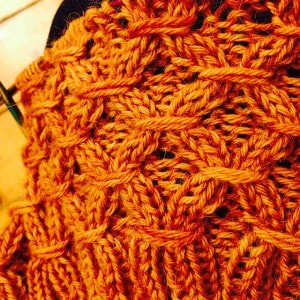
One of the first projects of the year was Tin Can Knit’s pattern Gather, a hat and cowl pattern which feature smocking. Now, I had always loved the look and texture of smocking but put it down to it being one of those things that would be tricky and so I put smocking in my “one day I’ll learn” pile….. it is really, really simple and such good fun to knit.  And when I say simple…I could do it in front of River City.  It was incredibly pleasing to watch that honeycombed goodness emerge and you get that pattern-emerging satisfaction almost immediately. As always a beautifully written pattern by Tin Can Knits, easy to follow and – again, as always with their patterns – I immediately wanted to cast on another!

The yarn is Yarn Pony Highland Pony sport weight, which is a blend of 50% Suri alpaca and 50% merino….hellloooo, soft, sultry, sexy yarn! It was like knitting with air! I really love the colours that Mica  (one half of the amazing duo behind the Edinburgh Yarn Festival, as well as dyer-extraordinaire!) creates. There is such a depth of hue in this Toffee Cinder colour – caramels, toffees, fudges – honeyed colours that are a feast on the eyes, delightful to feel and, quite frankly, make me need some sweeties, stat!

yarma_medium2gaither


You can find Yarn Pony Yarns in Kathy’s Knits and The Woolly Brew and if you are interested in learning to dye your own wool why not subscribe to Mica’s blog to find out when she is running her next dyeing workshops?

 : : H O X N E : :

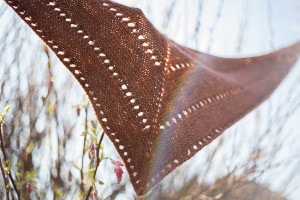
My first version of Karina Westermann’s shawl, from the Doggerland collection, was also the first time I had knit with lace weight wool! I had used Shetland Organics laceweight on that version, but had done a bit of struggling to get the sheepy yarn wrangled on the slippy metal needles. I loved the pattern, but I had made a couple of mistakes in that one and decided I would knit another one straight away…if at first you don’t succeed!

The yarn I used on this version was Laura’s Loom BFL single lace weight yarn. Laura has a real love affair for British yarn and has a real desire to know exactly where the wool comes from when she is weaving her beautiful cloth. The wool in this yarn is from the Yorkshire Dales and you can see from Laura’s website how important wool miles and the idea of local is so incredibly important to her and her work. I really enjoyed working this yarn. It has just a little more sturdiness than BFL I have knit with in the past (maybe due to twist?) and I love that I can scrunch hoxne around me on a cold day, but if I give it a shake the pattern completely opens up again! Magic!

If you like shawl knitting I cannot recommend Karie’s patterns highly enough – they are always so beautifully written and I love learning about her inspiration behind the patterns. Hoxne is a lovely knit. I really felt it’s rhythym when I was knitting it and in places it was almost intuitive.

yarma_medium2

yarma_medium2a


I quickly realised I had not bought enough yarn and so skipped the last repeat on the shawl and played yarn chicken! I cast off in a little lilac Scottish lambswool (an experiment with Kool Aid) and I love that tiny little ping of different tone at the edge.

: : Maets dna ssarb fo ega (Age of Brass and Steam) : : 

Named backwards because instead of knitting the kerchief as directed, I reversed the stockinette section to garter and the garter eyelet section for ST ST. It is knitted in Viola, a merino DK yarn spun and colour blended by the fantastic Devon millJohn Arbon.

_MG_2423

I adore this yarn, the colours are multi-faceted and have been blended to look hand-dyed! Thick, plumpy and so cozy. Age of Brass and Steam is brilliantly quick knit and definitely recommended as great first shawl project.

: : R A M O N A : :

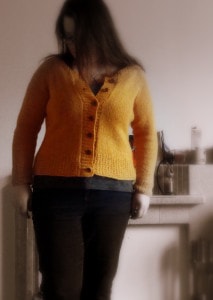
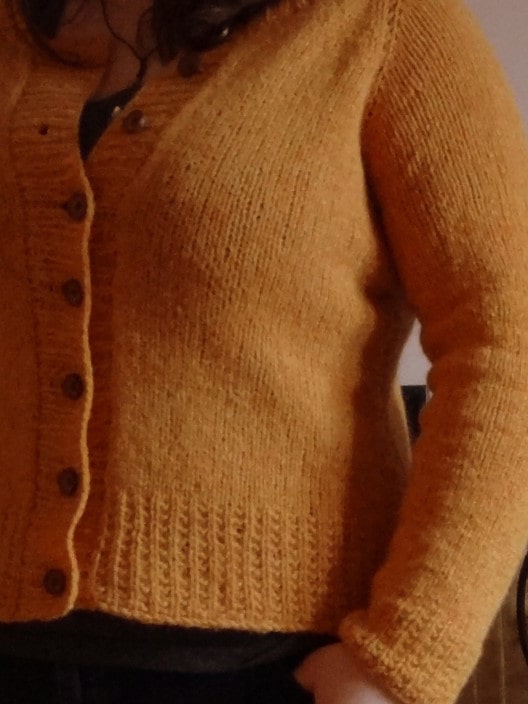
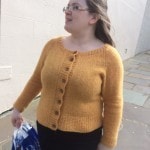
This is my most recent FO and I adore it. The Ramona Cardigan is by Elizabeth Smith. I was really drawn to the simple style and that beautiful deep ribbed hem.  It was a relatively quick knit and I think I would have been finished it much quicker had I not had a trip away amid knitting it.

cardi 004

The yarn is JC Rennie Chunky (but actually aran) lambswool; this is on the cone and greasy and I really liked knitting with it – though it can be bought in balls and non-greased. It is a lovely robust yarn, soft and has a slight tweedy look. I am keen to knit with this yarn again but, if like me, you prefer to see large swatch  pictures of the different colourways, you may be a bit disappointed with the KnitRennie site. The swatch images are tiny! Ravelry is great for checking out better colour images and looking up garments made in this yarn if you need more visuals.

I was determined that I was not going to lengthen or modify the pattern in anyway (as I usually do this!) but the only mod I made was to knit the same rib on the cuffs as there is on the hem! I knew I wouldn’t be able to resist a tiny change!

cardi 005

I’ll try not to forget about the FOs on the blog, in addition to discussing them on the podcast!

What have you cast off recently? If it’s in British wool you can share your projects in the KnitBritish Ravelry group – you can also join in the chatter on your favourite British yarns and dyed wool and also tell us about your Desert Island Knits.

More British wool for all budgets

Update June 16

Since I first wrote this post in 2014 there have been some changes and lots of new yarns! I have updated this post to reflect those. 

: : : : : :

In the last few years I’ve blogged (and regularly updated) about UK yarns for Under £5, Under £10 and for a few pennies more. You’d think after all that time I would stop being surprised when people tell me that British wool is too expensive for them. I have written and spoken about the misconceptions of this before and also written a post begging the question what is the true cost of your making and how much are you willing to spend on your materials for quality, hand-knitted items. (I know that there will be more misconceptions and more posts to follow!)

We all have a budget for yarn buying; sometimes we need reining in and other times we impose yarn diets on ourselves. I am quite sure that since I started KnitBritish the more I’ve learned about my wool, what goes into it, where it comes from and how it is created that my own yarn purse strings have lengthened a little. We all like good value, but there is no doubting that we like a little streak of luxury too. With that in mind, I have (in no particular order) a range of yarns from around £3.50 to £24 – beautiful, British (grown, dyed or spun – if not all three) and will suit a wide variety of budgets. 
Read More

episode 6 and the FOMO

UPDATE: Due to space I can no longer host the audio files on the blog, please use your favourite podcatcher, or right click the podgen link to open the podcast episode in a new window: Podgen

  • A little round up of my recent blogs and mentioning fantastic Knitsofacto’s blog
  • The Little Yellow Duck Project – random acts of ducky kindness and an excellent way to raise awareness of the importance of donation. Please check the website out. Also mentioned the Ottawa statue scarf knitters
  • Cast on/Cast off – the lovely lovely Ramona cardi is on me – its a great, simple cardi pattern. The buttons came from Textile Garden!  Casting on Lush by Tin Can Knits in Brigantia DK. There is movement on Tree Rings blanket too with a new scallop lace edge here
  • Sheep adoption and sponsorship – are you doing this? Shankend Farm have a great group on Ravelry where you can see how the scheme is working with them. There is also info on www.woolsack.org. I am  very interested to do this and track the progress from farm to yarn on KnitBritish. Are you offering sheep sponsorship with British breeds; are you a mill who can spin the fleece for me; are you an indy dyer who can teach me how to dye my finished yarn? Get in touch.
  • Wool Festivals – FOMO (fear of missing out) over Unwind Brighton. Have you seen the line-up A Playful Day is planning a podcaster meet up. The Highland Wool Festival will definitely help ease the Unwind FOMO!
  • Shetland Wool Week (4-12 Oct) Tickets go on sale on Monday morning. Do not miss out!

Early colourwork from Shetland

I slightly hesitate in beginning another post featuring Fair Isle, but let me say first many thanks for all the shares and comments on the Origin & Ownership blog.  I was particularly careful to say throughout that post that those were my thoughts on the subject. I was not tackling why we often refer to any colourwork as Fair Isle,  but rather musing on ideas of ownership within that umbrella. Yes, as one commenter pointed out, there IS rigidity in calling everything Fair Isle, but that’s an argument interesting blog for another day.

anyway…

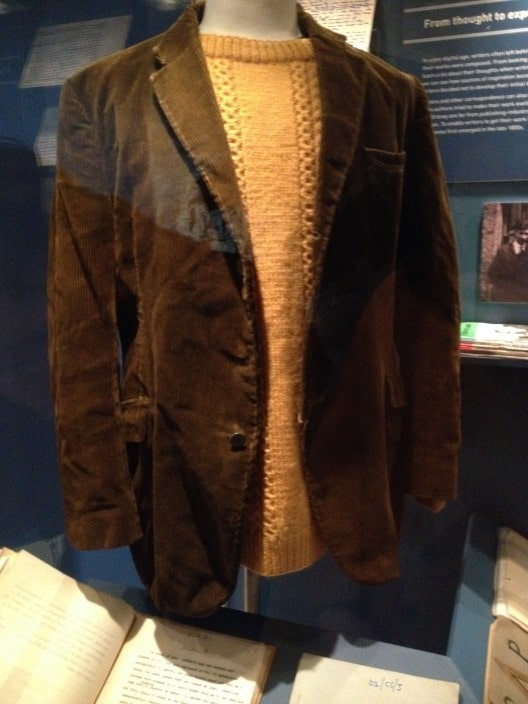
The lovelyfella and I were in the Shetland Museum yesterday having a wander around the the wonderful exhibition that they currently have on at the moment, Writing the North, which explores the connections through Shetland and Orkney’s literary history. After marvelling at the hand-written letters of Hugh MacDiarmid; an animated journey of Sir Walter Scott in Shetland and Orkney; the first book published by a Shetlander; the delightful yellow gansey belonging to George MacKay Brown and listening to Shetland poetry on an old wireless set – we then thought we would take a quick turn about the Museum before we left.

George MacKay Brown's coat and gansey

George MacKay Brown’s coat and gansey

I found myself drawn to the display of the Gunnister Man. He was found in in 1951, when two local men were cutting peats near Gunnister in the North Mainland of Shetland.

The body dated from the late 17th/early 18th century and was purposely buried in the peat along with his possessions, which included coins, a small wooden pail, a belt,  rivlins (foot wear) and a selection of knitted items, including stockings, gauntlets, two caps and a knitted purse.

It is not known if the man was local or a visitor, or if he died of an illness or exposure. Shetland was still in the grip of the Little Ice Age during the suspected dates of the Gunnister Man’s death and his many layers of woollen clothing may not have been enough to help him survive the extremely harsh weather.

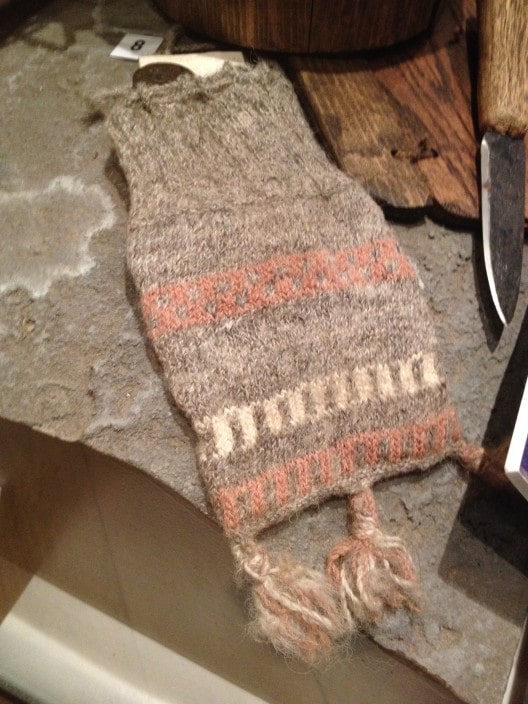
The purse that was found in the belongings is the first example of colourwork knitting to be discovered in the isles.

photograph from the Shetland Museum and Archive

The main colour is a dark mixed grey with a small geometric design in red and white wool.

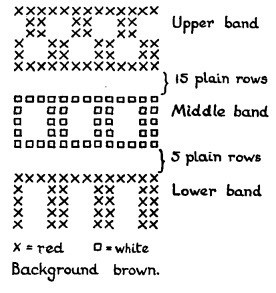
The yarn is a rather unevenly spun 2-ply Z [direction of twist]. There are 11 stitches and 16 rows per inch measured on the stocking stitch. The bag is worked on four needles, and was cast-on with 86 stitches at the top. The first 2 ins are a rib of 3 plain 2 purl or 2 plain 2 purl stitches. There is no shaping. In the plain part there are 3 narrow bands of “Fair Isle” pattern.

Henshall, Audrey S.; Stuart Maxwell (1951-1952). “Clothing and Other Articles from a Late 17th-century grave at Gunnister, Shetland

This replica in the Shetland Museum shows the design more clearly.

IMG_4451

It is rather thrilling to look at this, the little coloured squares – the colours themselves, in fact! – to think that someone wore this in the late 17th century as not only an item of function, but as something designed to be aesthetically pleasing too.

Again, it is uncertain whether the Gunnister Man or his knitted items originated in Shetland. His coins were Swedish and Dutch, but these were common in Shetland at the time and so they offer no further clue, but isn’t it lovely that this little fragment of colour – no doubt lovingly made for the man – was the first of its kind to be be found here in Shetland?

Such a delightful and humble beginning to the tradition we now *often* refer to as Fair Isle. Mighty oaks from little acorns grow!

You can find out more about the Gunnister Man exhibition here and read the original Proceedings of Antiquaries of Scotland article here  which goes into fine detail about the finds and the garments.


gman